What it is
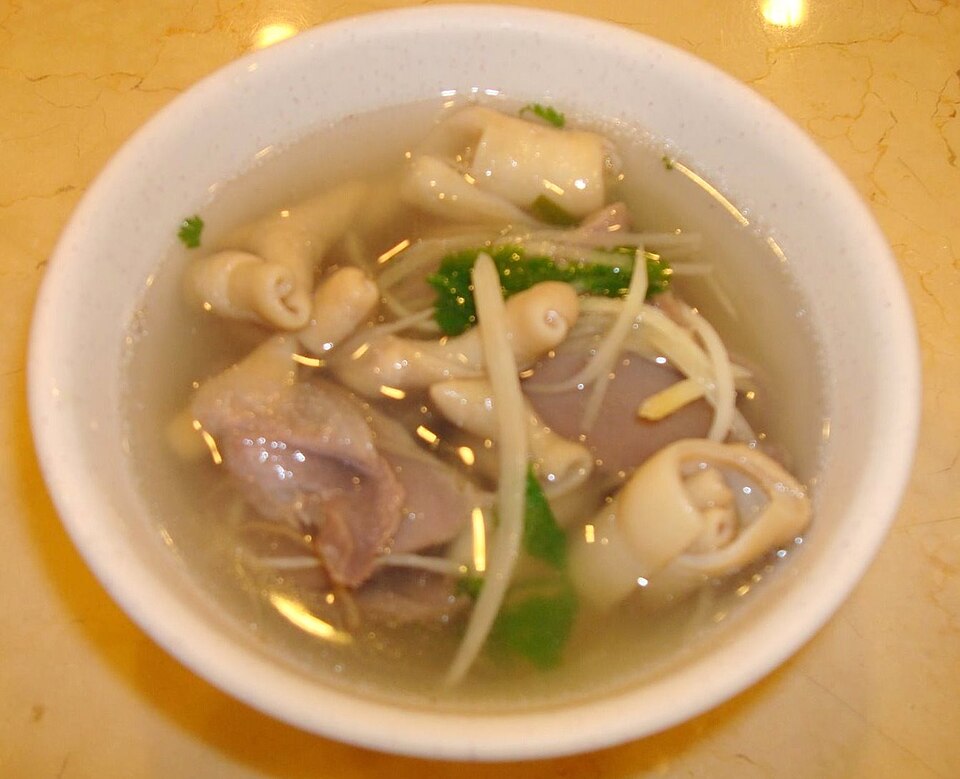
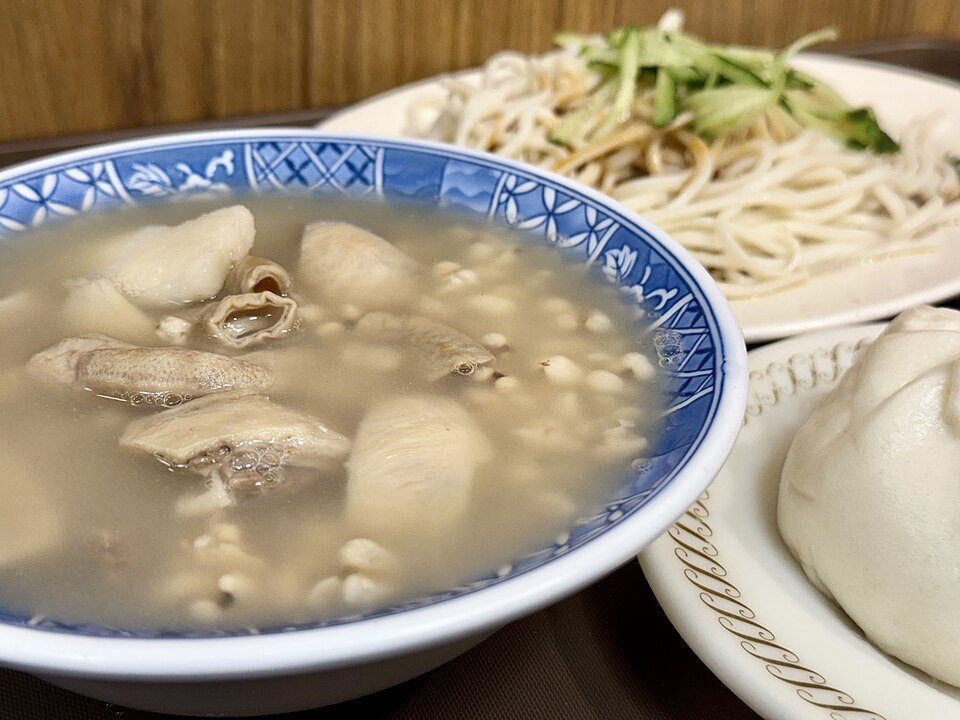
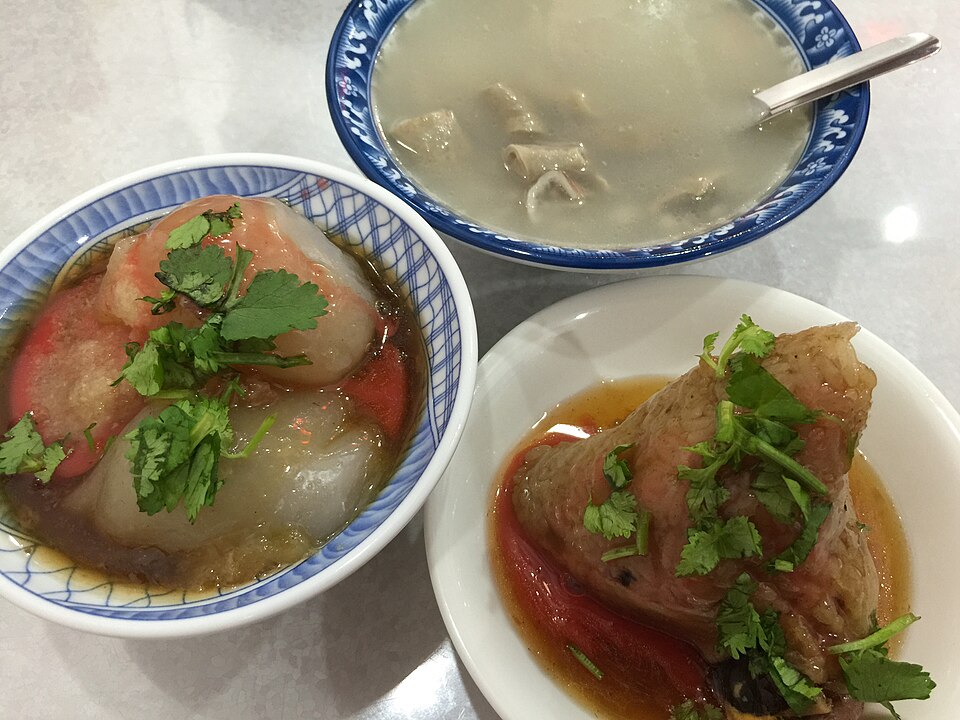
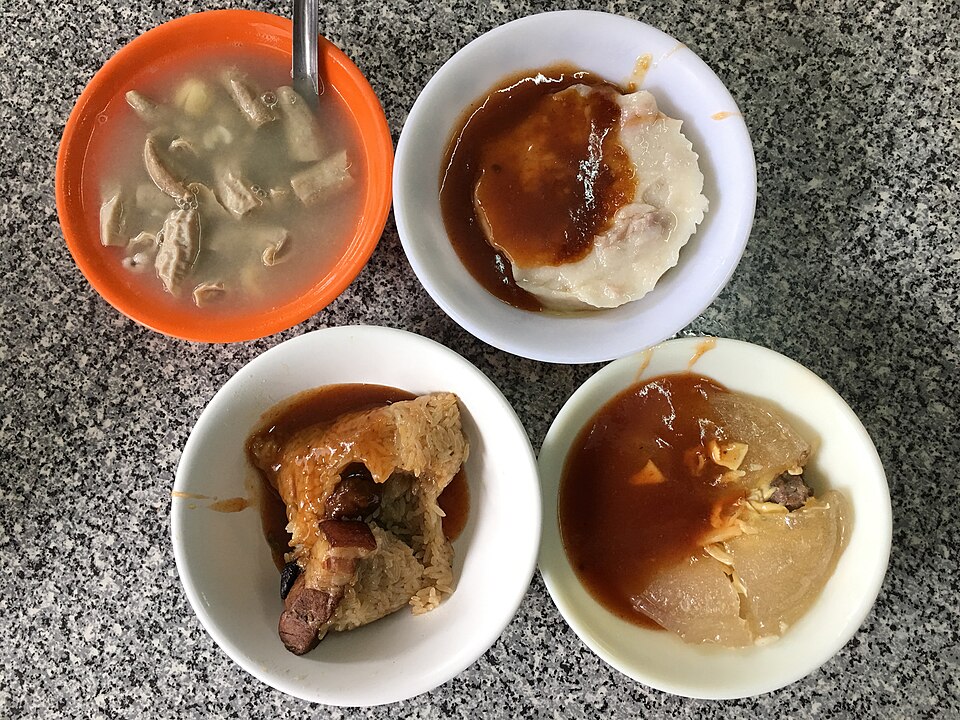
Four-herb soup (四神湯, sì shén tāng) is a light pork broth made slightly starchy by herbs and grains. The classic four are Chinese yam, fox nut (芡實), lotus seed and poria (茯苓), a fungus used in Chinese medicine. Taiwanese stalls add plenty of job's tears (薏仁), a chewy grain, and serve it with sliced pork intestine or stomach.
Where it came from
The name probably began as 四臣湯, 'four ministers soup'. In Chinese medicine, 臣 (minister) is the name for herbs that support the main ingredient of a formula. In Taiwanese Hokkien, 臣 and 神 (spirit) are both pronounced sîn, so the name drifted to 'four spirits'. A folk tale explains it differently: four officials fell ill while travelling south with the Qianlong Emperor and were cured by the herbs stewed with pork stomach.
In Taiwan the soup may be younger than the legend suggests. The culture writer Tsao Ming-tsung (曹銘宗) found no mention of it in Qing-era Taiwanese texts. A Japanese-era Taiwanese dictionary lists 四神 only as the four herbs, made into powder, cakes or tea, so he thinks the soup appeared late in Japanese rule or after 1945. Once it became street food, vendors added cheap job's tears in bulk, used intestine more than stomach and toned down the medicinal taste.
How it is made
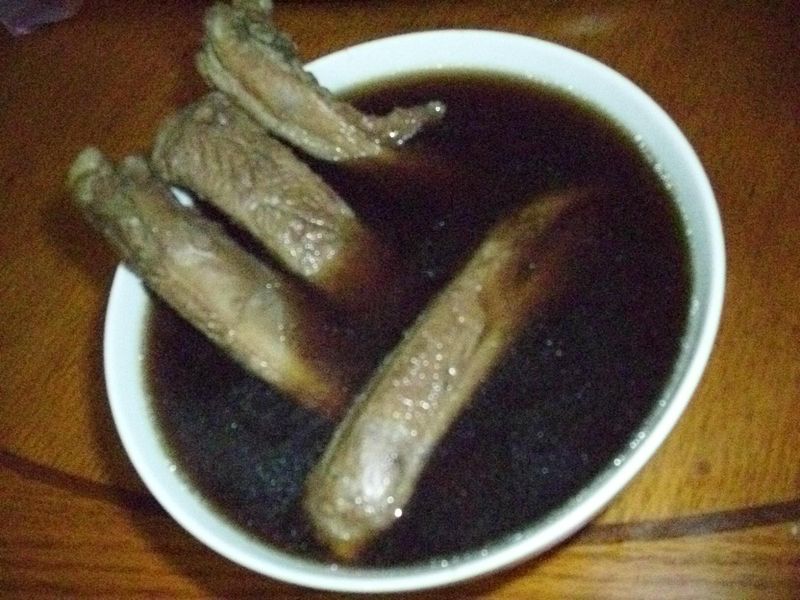
The offal needs careful cleaning: stomach and intestine are rubbed with salt and blanched. They simmer for a couple of hours with old ginger and pork ribs, since stomach alone gives little flavour. The herbs and job's tears are cooked separately until soft, then stirred into the broth. The offal is sliced and returned near the end so it does not shrink. The pot is often finished with rice wine, sometimes steeped with angelica root (當歸).
How to eat it
It is a side soup rather than a meal on its own, eaten at lunch or as a snack. In southern Taiwan the standard partner is migao (米糕), sticky rice with pork sauce. Some Taipei shops sell steamed pork buns to go with it. Some shops put a bottle of herbal rice wine on the table so diners can add a splash.
Around Taiwan
- Tainan
- Tainan's migao shops treat four-herb soup as the default bowl beside the rice. At Hsia Ta Tao Lan Migao (下大道蘭米糕) it is the classic choice, with pork cartilage, fish skin and fried dough stick soups as alternatives.
- Kaohsiung
- In Ciaotou, Liao Chi Migao (廖記米糕) has sold only migao, four-herb soup and thin noodles (麵線) for decades. The Michelin inspectors call the rice with this clear, sweetish soup a classic local pairing.
- North
- A Tung A Pao Sishen Soup (阿桐阿寶四神湯), near Shuanglian MRT station in Taipei, opened in 1977. It sells pork buns and house-made shaomai to eat with the soup, and puts bottles of herbal wine with ginseng and angelica on the tables.