What it is
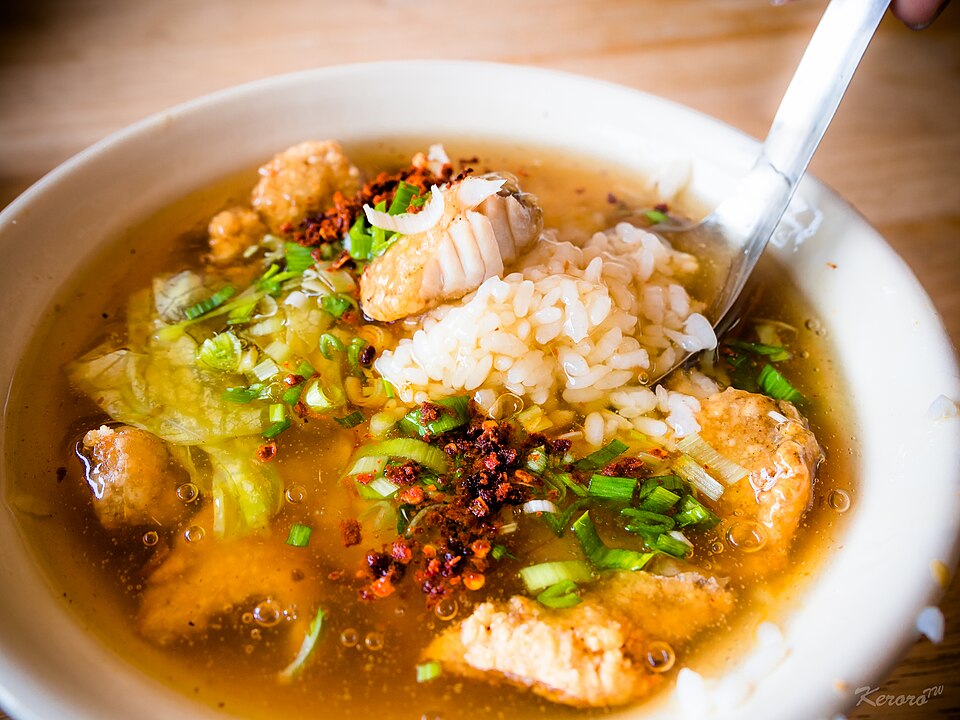
Spanish mackerel thick soup (土魠魚羹) is a bowl of fried fish in a broth thickened with starch. The fish is Scomberomorus commerson, called 土魠 in Taiwan and 馬加 in parts of southern China. Pieces are coated and deep-fried before they go into the bowl. Fried garlic, dried flatfish (扁魚), bonito flakes and cabbage are common flavourings for the broth.
Where it came from
Spanish mackerel swims south through the Taiwan Strait each winter and carries more fat at that time of year. Penghu lands the largest catch, and Yilan, Tainan and Kaohsiung fishermen bring it in too. An old Taiwanese saying, 一午二紅沙三鯧四馬加, ranks it fourth among the most prized fish.
The dish may have European roots. Cheng Wei-chung (鄭維中), a historian at Academia Sinica, suggests that Dutch sailors and minor officials in 17th-century Taiwan spoke to Chinese residents in Portuguese or Spanish, and that the word 土魠 came out of those exchanges. Writers drawing on his work add that coating fish, frying it and serving it in a thick soup is a European way of cooking, close to the battered, fried nanban dishes Portuguese sailors took to Japan. Tainan's cultural heritage office, citing his research, says Han settlers of the Dutch period picked up this way of eating fish and kept their taste for the species. These are theories rather than settled history.
Over time the soup became everyday Tainan food, sold from small shops from morning to night.
How it is made
The mackerel is cut into chunks, coated in starch and deep-fried. The broth is a separate pot. Shops build it on fried garlic with dried plaice or flatfish and bonito for savouriness, often with shredded cabbage. It is thickened with a starch slurry. To serve, the fried fish goes into a bowl, the hot broth is ladled over, and noodles or other extras can be added. Home recipes add a dash of black vinegar at the end.
How to eat it
There is no fixed mealtime for it, and some Tainan shops are busy from morning to night. Order a plain bowl of the soup, or ask for it with rice noodles (土魠魚米粉), other noodles or rice to make a fuller meal. Extra side dishes are common.
Around Taiwan
- Tainan
- Kaiyuan Red-cook Spanish Mackerel (開元紅燒土魠魚羹) in North District, a 2026 Bib Gourmand, has been busy for more than four decades. Its broth is built on dried plaice, bonito and fried garlic.
- Outlying islands
- Penghu brings in more Spanish mackerel than any other part of Taiwan, mostly during the winter run through the Taiwan Strait.