What it is
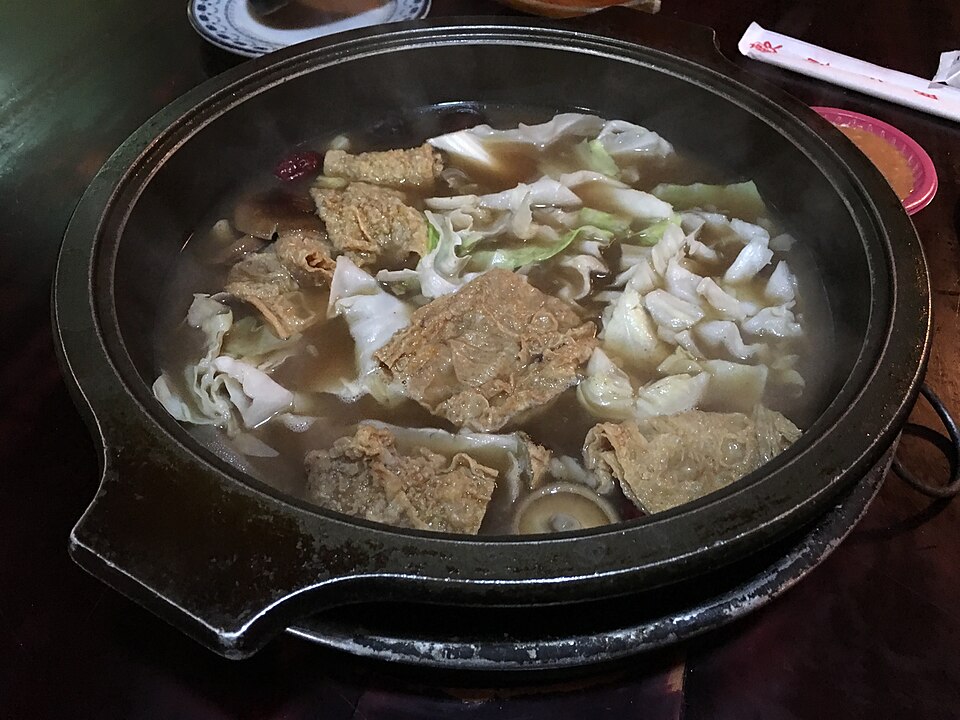
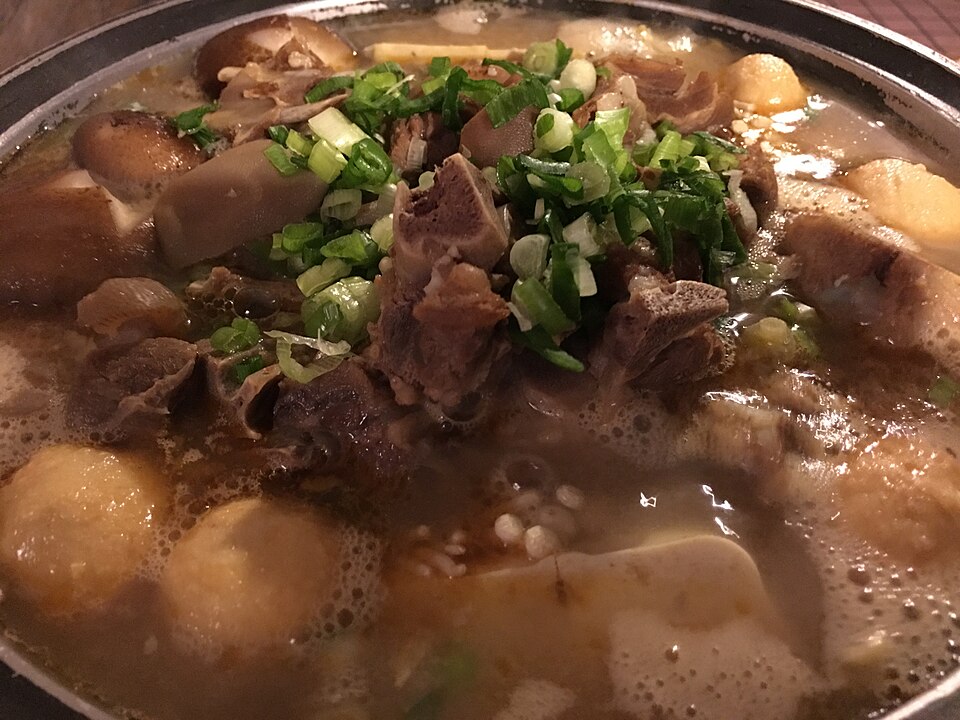
Goat hot pot (羊肉爐, yáng ròu lú) is a pot of broth simmered from goat bones and Chinese herbs, served with goat meat, often skin-on, and sometimes offal. In English it is often called mutton hot pot, but in Taiwan the meat is usually goat. Goat restaurants also sell stir-fries, offal dishes and noodles.
Where it came from
Goat soup came before the hot pot. In the farming era people did not eat beef, so goat was the meat for building strength. Northern Kaohsiung had poor land for crops, and native black goats were raised nearby in Tianliao and Alian. Gangshan itself produced little goat. It was a trading town, and a fair held three times a year around Shoutian Temple (壽天宮) drew goat dealers and made it the place to eat goat.
Yu Chuang (余壯) is said to have been the first to sell goat soup in Gangshan's old market, in 1926. He used herbs to tame the gamey smell and kept the skin on. Through the Japanese era, vendors in Gangshan and in Xihu, Changhua, sold goat soup, noodles and stir-fries, but no hot pot. Accounts differ on when the pot arrived. Chinese Wikipedia dates it to the 1970s, while a 2022 agricultural feature puts it around 1985, after Yu's family began adding vegetables and tofu skin. Goat remains one of Gangshan's three treasures, with honey and chilli bean paste, though the Taipei Times reported in 2018 that over 90 per cent of the goat served in town was imported.
How it is made
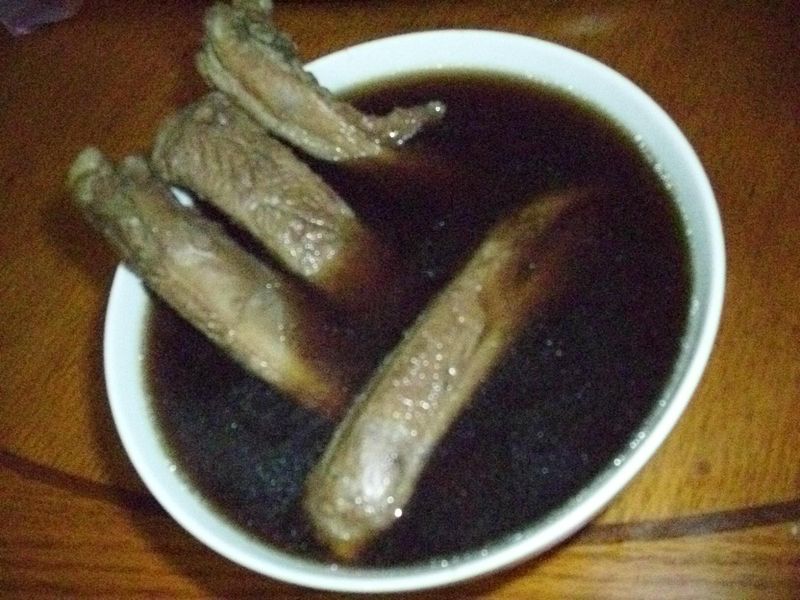
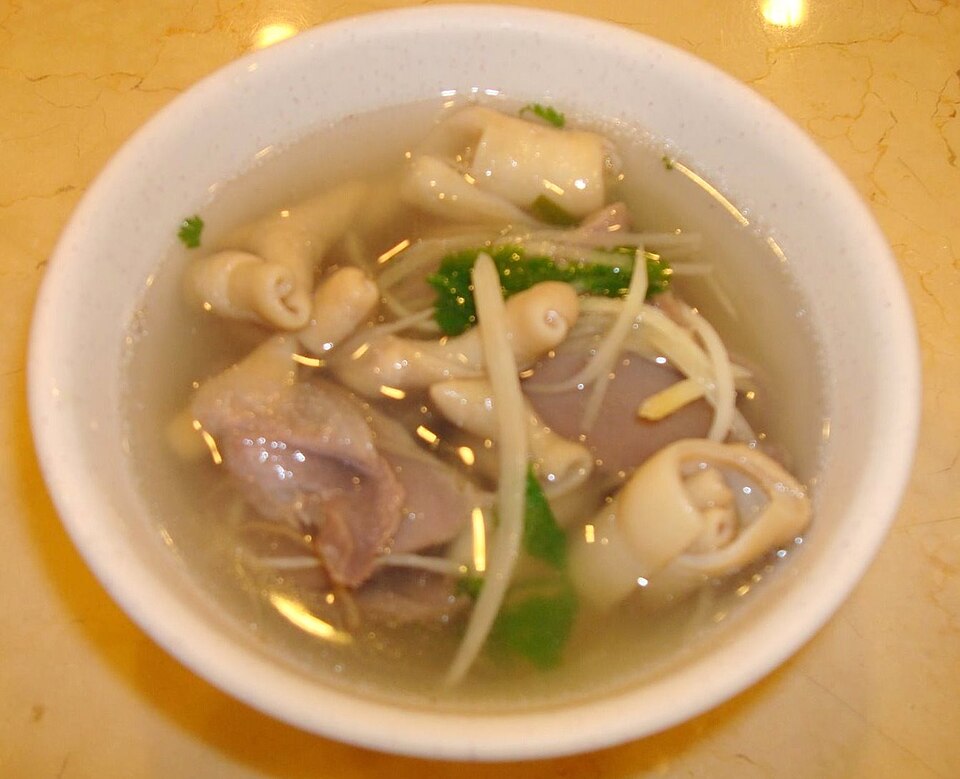
There are two broad styles. One is a dark braised (紅燒) broth with skin-on goat. The other is clear and herbal, built from goat bones, Szechuan lovage, angelica root, goji and a whole piece of old ginger, with thin boneless slices. Gangshan shops often use an angelica (當歸) broth and cook the whole animal, including head meat and feet.
How to eat it
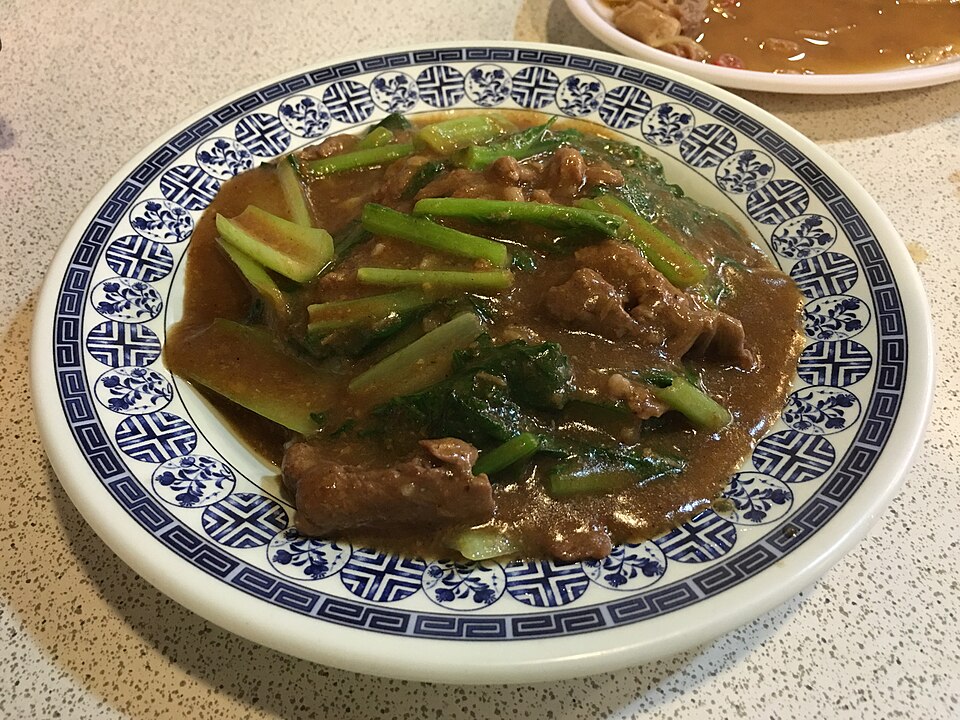
A winter tonic above all, and queues form outside goat restaurants in cold weather. Add cabbage and fried tofu skin to the pot, and dip the meat in chilli bean paste, fermented tofu or a mix of both. Thin noodles tossed in sesame oil or goat fat come on the side, often with a stir-fry such as goat with bitter melon.
Around Taiwan
- Kaohsiung
- Gangshan is the goat town. Joes (舊市羊肉), founded in 1955 by a man who had sold goat in the market, holds a Michelin Bib Gourmand and is known for goat with bitter melon. Ta Hsin (大新羊肉) traces its line to the 1926 soup stall.
- Central
- Xihu (溪湖) in Changhua is the other town famous for goat hot pot. As in Gangshan, goat soup and stir-fry sellers worked there for decades before the hot pot took hold.