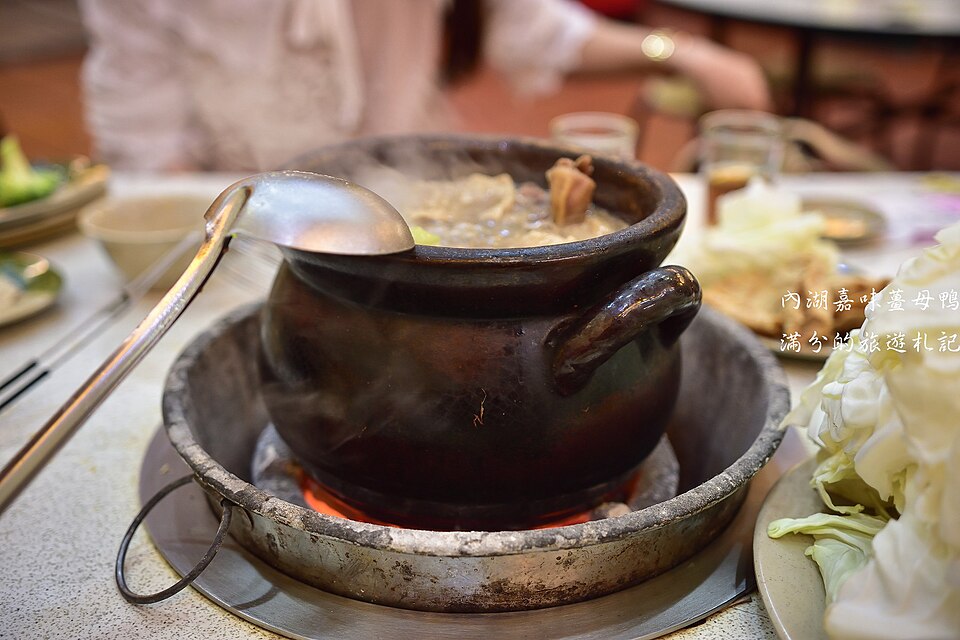
What it is
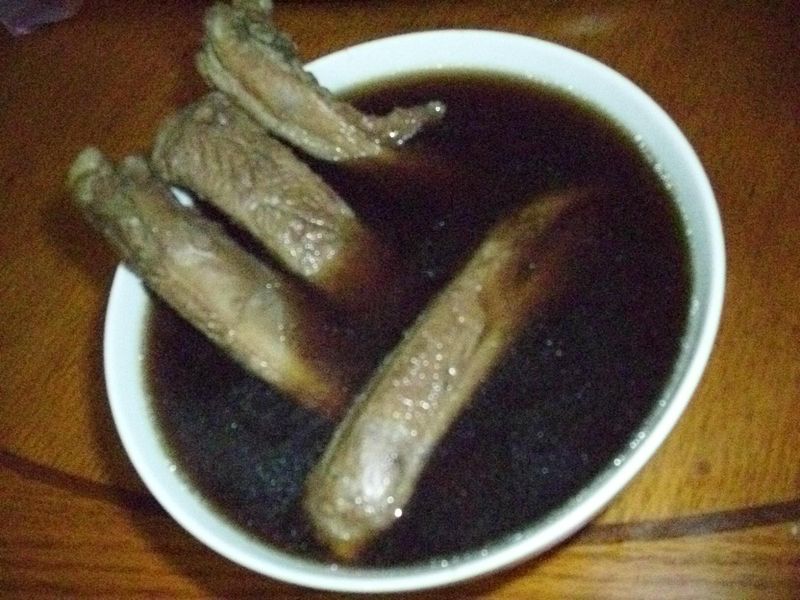
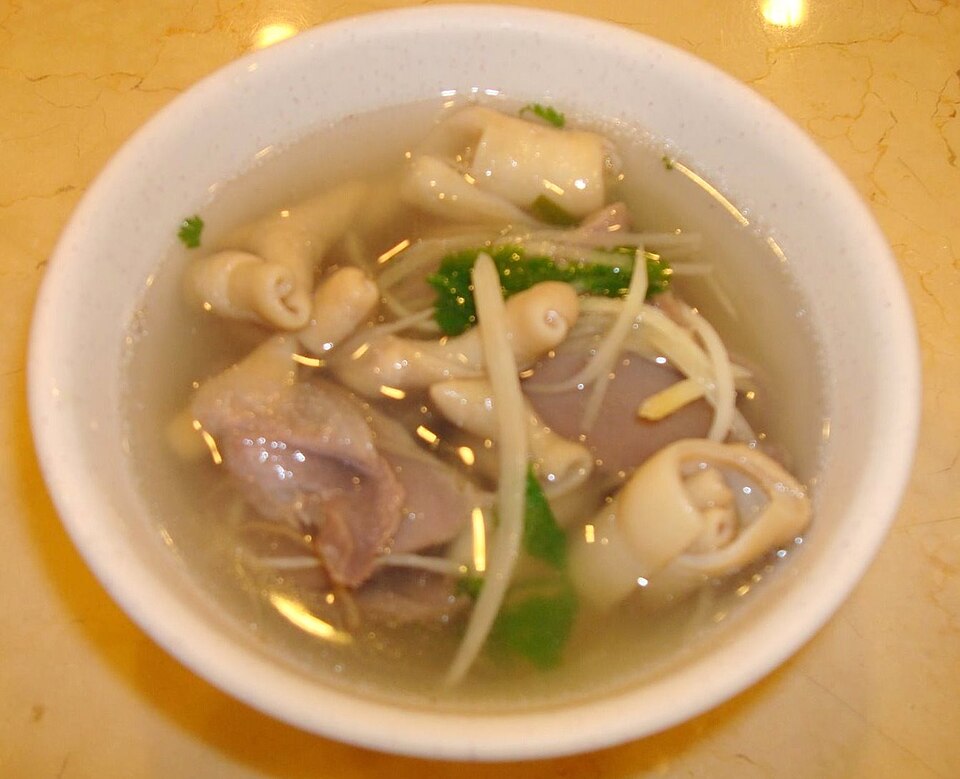
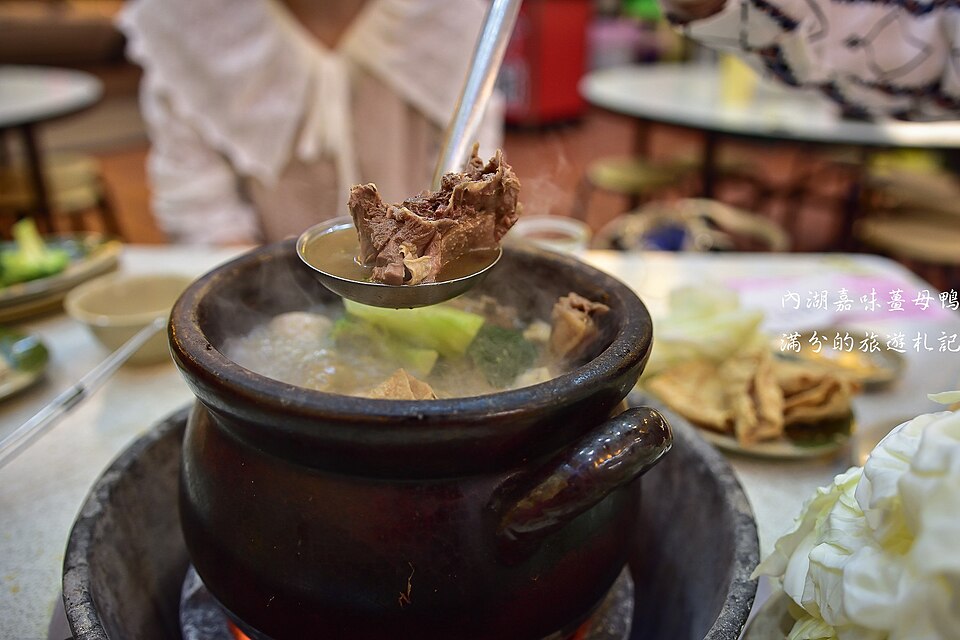
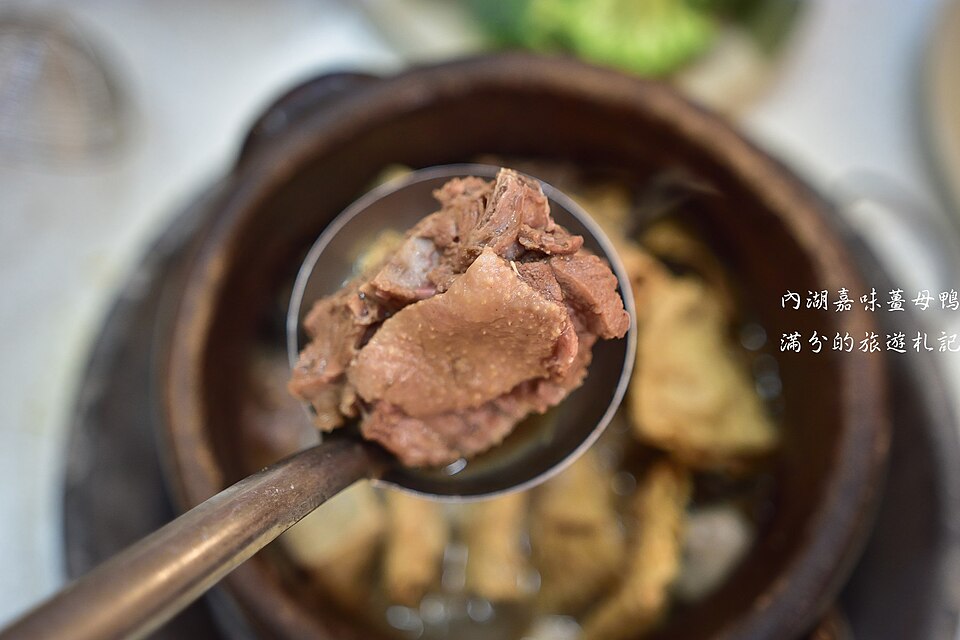
Ginger duck (薑母鴨, jiāng mǔ yā; Taiwanese kiunn-bó-ah) is a Taiwanese winter hot pot. Duck pieces are stewed with old ginger (薑母), sesame oil, rice wine and Chinese herbs until the pot turns a dark, almost black red. Once the smell of alcohol has faded, it becomes a hot pot for vegetables and other add-ins.
Where it came from
Where it began is disputed. In Tong'an, near Xiamen, the same name was used for a salt duck: duck covered with old ginger, water and plenty of salt, cooked slowly until the liquid was gone. Some people in Quanzhou, meanwhile, say the dish came from Taiwan. The food writer Chen Jingyi (陳靜宜) argues that the soupy hot-pot version is a Taiwanese creation.
Neither the Quanzhou dish nor early Taiwanese pots used sesame oil, so the broth stayed pale. In the 1980s Taiwanese vendors added sesame oil, rice wine and herbal blends, creating the dark version sold today. That style spread to Xiamen in the 1990s.
Hou Hsiang-sheng (侯翔笙) started selling ginger duck under Bailing Bridge in Taipei in 1982 and believes he was the first in Taiwan to write 薑母鴨 on a shop sign.
How it is made
Cooks favour the red-faced muscovy duck (紅面番鴨), usually a drake. The duck goes into a clay pot with sliced old ginger, sesame oil, rice wine and herbs such as Szechuan lovage (川芎) and angelica root (當歸), and cooks over a strong flame. Some shops use rice wine alone, with no water.
How to eat it
Many stalls open only in autumn and winter. Dip the duck in chilli bean paste (豆瓣醬) or fermented tofu (豆腐乳). As the meal goes on, cook cabbage, tofu skin or rice blood cake (米血) in the broth, and finish with thin wheat noodles (麵線). Some alcohol can remain, so do not drive afterwards.
Around Taiwan
- Kaohsiung
- Master Hong (洪師傅) has served ginger duck opposite Zhennan Temple (鎮南宮) in Cianjhen for more than 30 years. Diners can pre-order seafood for the pot, and a red crab gives the broth a mixed meat-and-seafood flavour.
- North
- Hou Ginger Duck (侯薑母鴨) in Shezi, Taipei, grew from a stall its owner opened in 1982. It sells for only about four cold months a year and uses drakes raised for a full year, cooked in rice wine with no water.