What it is
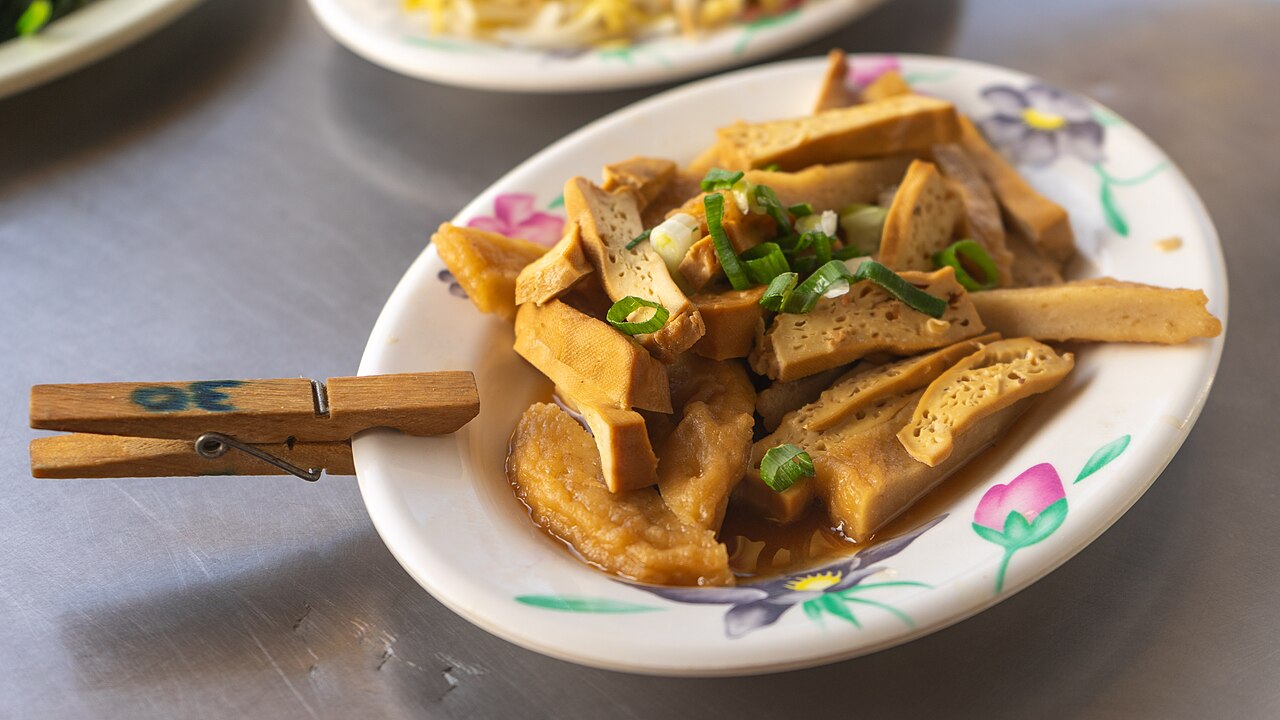
Menus call it 炸牛蒡 (fried burdock), but it is really a fish cake: burdock root mixed with or wrapped in fish paste, then deep-fried. It belongs to the family Taiwan calls 甜不辣 (tianbula) or 天婦羅, fried fish-paste products that are quite different from Japanese batter-fried tempura.
Where it came from
Fried fish cakes of this kind arrived in Taiwan under Japanese rule. The Kanto and Tohoku regions of Japan call them satsuma-age, after their home in Kagoshima, but Kyushu and western Japan call them tempura, and it was people from Kyushu who brought them over. In Taiwan the word became 甜不辣. The characters read roughly 'sweet, not spicy', but the name only imitates the sound and says nothing about the taste. Japan has its own burdock version, gobōten (ごぼう天), with the paste wrapped round sticks of burdock.
Names shifted as the cakes spread. The north more often says 甜不辣 or 天婦羅, and its pieces tend to be much smaller, while the south mostly says 黑輪 (oden). The food writer Jiao Tong (焦桐) has suggested that the Taiwanese version may first have developed at the Miaokou temple food stalls in Keelung.
How it is made
Fish is beaten into a springy paste, sometimes with starch, sugar or other seasoning worked in. Fresh burdock is peeled and cut into pieces, then coated in the paste or mixed through it. The cakes are deep-fried until the surface crisps while the burdock inside keeps its crunch. Some makers fry at a lower temperature so the result is less greasy.
How to eat it
It is a snack or a side. Fish-noodle shops serve it with milkfish rice noodle soup, and fish-cake stalls put it on mixed fried plates with fish balls and oden. The flavour is gentle at first, and the earthy burdock builds as you chew.
Around Taiwan
- Kaohsiung
- In Yancheng, Dagouding Milkfish Rice Noodle Soup (大溝頂虱目魚米粉) sells fried burdock as a side. Also in Yancheng, in the First Public Market, Yama Ichi (山壹旗魚食製所) coats fresh burdock in marlin paste beaten each morning.