What it is
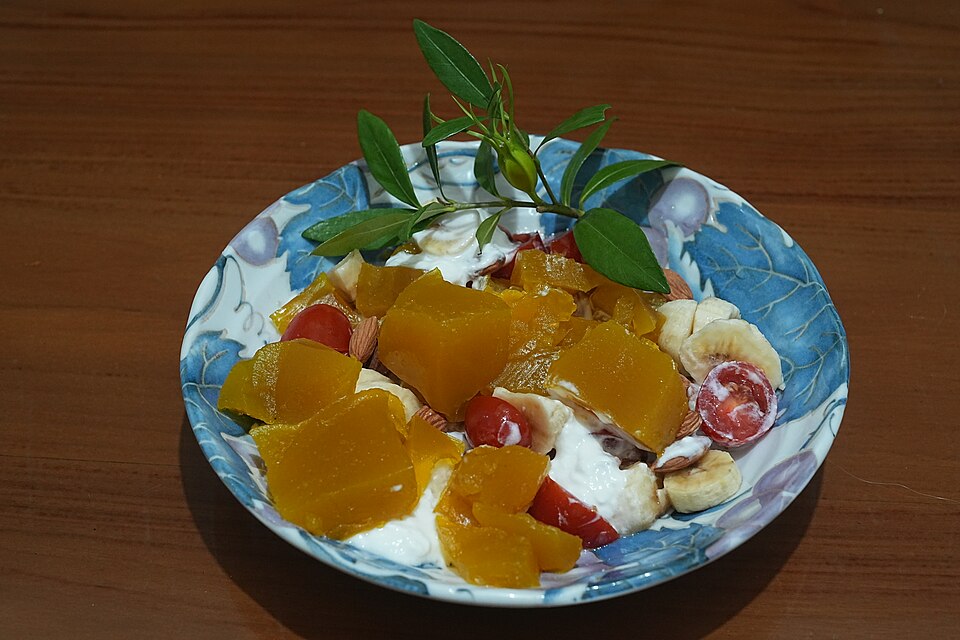
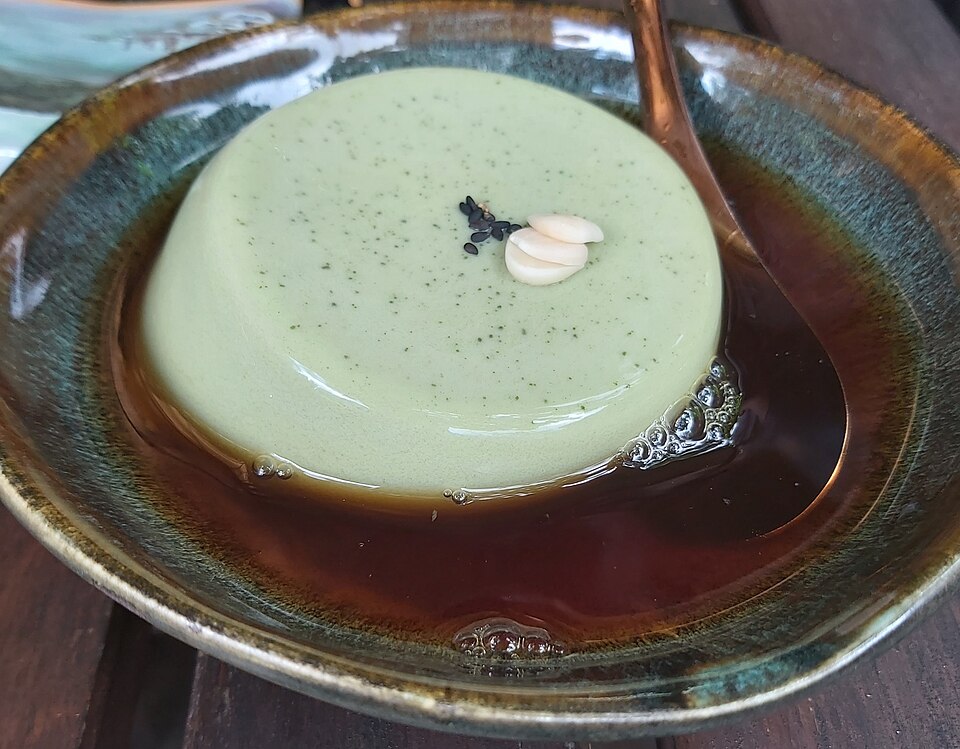
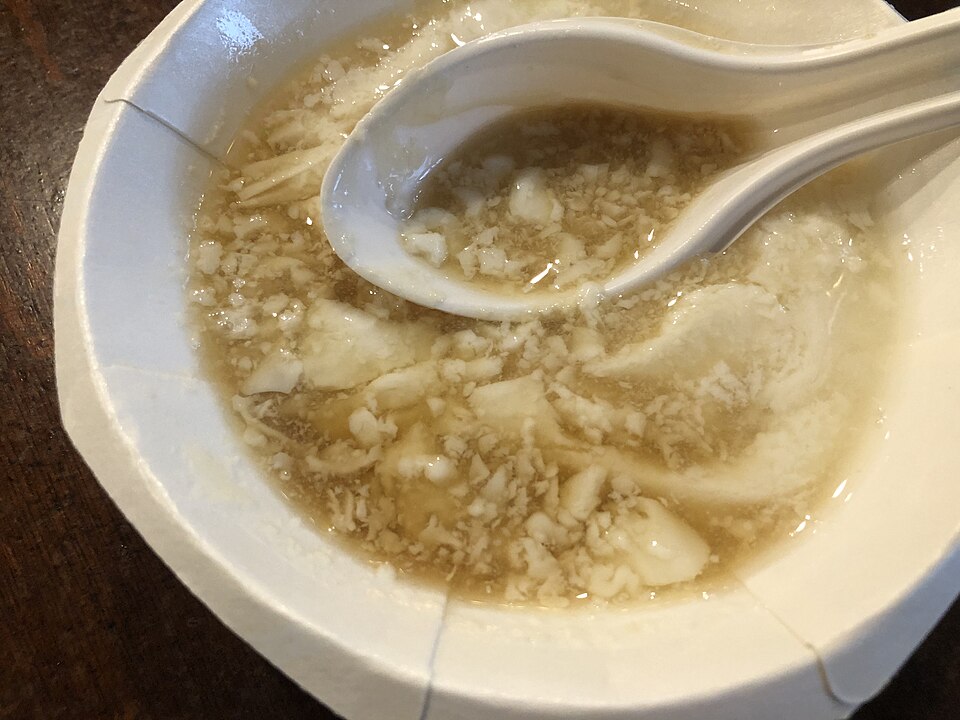
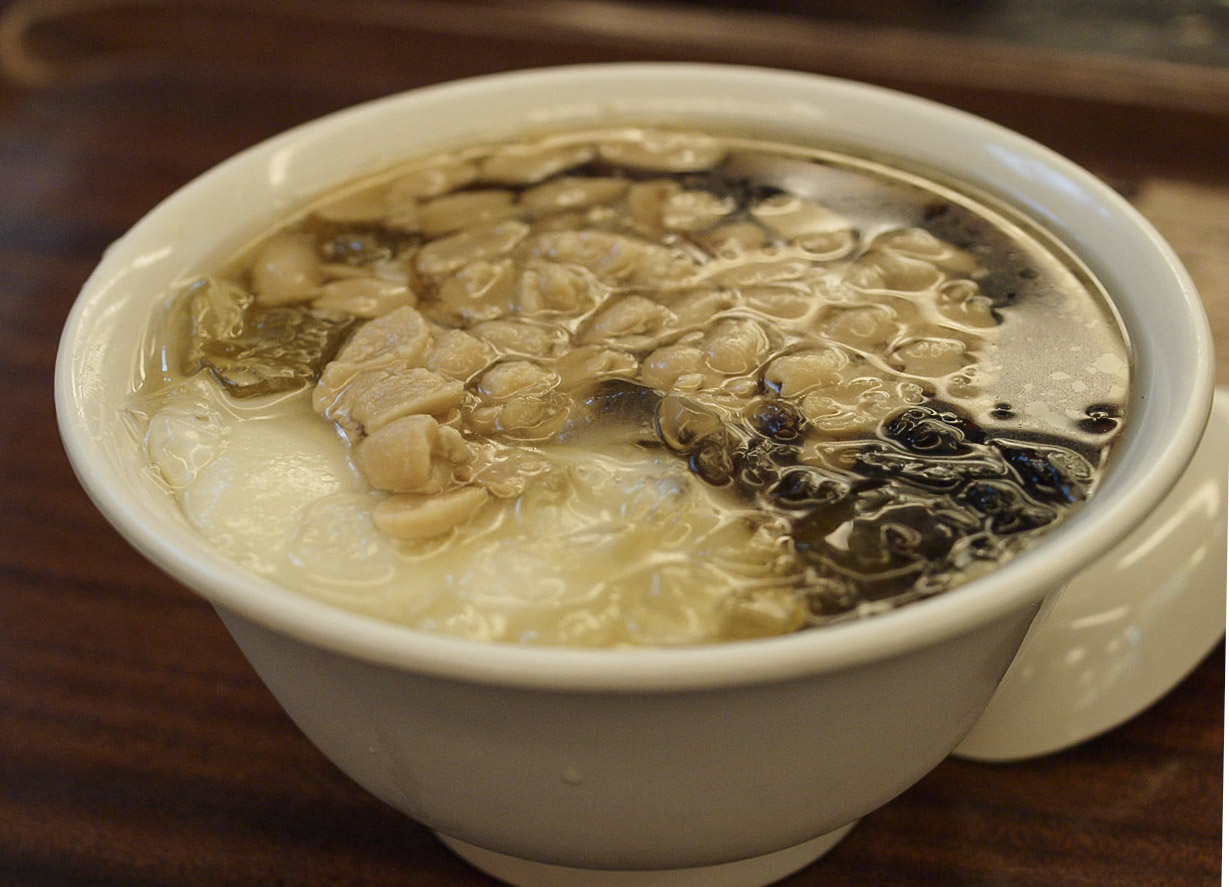
Douhua (豆花) is soy milk set into a curd softer than ordinary tofu. In Taiwan it is nearly always sweet, served in cold or warm syrup with toppings you choose, such as soft peanuts, red (azuki) or mung beans, tapioca balls, taro balls and Job's tears. In much of northern China it is eaten savoury, with soy sauce.
Where it came from
The curd itself is old, though how old is disputed. Chinese tradition places its start in the Han dynasty, but the earliest clear written record of tofu dates from AD 965. Its softness earned it the name 'tofu brains' (豆腐腦), still the usual word in northern China. Ming dynasty scholars credited Liu An, a Han prince, with inventing tofu and douhua, a story that is legend rather than documented history.
How douhua reached Taiwan is less well recorded. A 2025 Taiwan Panorama feature, one of few sources on this, says it came after the Second World War with migrants from Shantou in Guangdong province. Without the money to rent a market pitch, early sellers worked from tricycle carts, some pedal-powered and some motorised, and many later opened shops.
The dessert has kept changing. Smoother curds made with modern coagulants, three-colour douhua and newer shops designed with social media in mind have appeared alongside the old single-topping vendors.
How it is made
The beans are soaked, ground and boiled into soy milk. Boiling makes the milk foam heavily, so most makers add a defoaming agent, though a few simmer it longer over carefully controlled heat. The milk is cooled to about 80°C, a small dose of coagulant is stirred in, and the curd is left to set. Food-grade gypsum (calcium sulphate) is the most common coagulant; others use nigari, which is mostly magnesium chloride, agar or glucono-delta-lactone (GDL), which gives a smoother set. Brown sugar syrup is a common base.
How to eat it
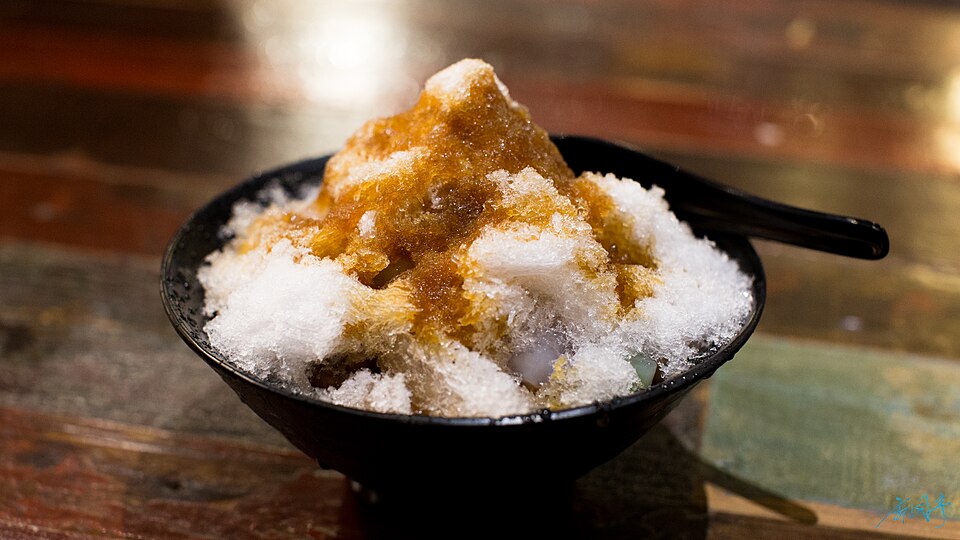
Douhua is a snack or dessert, not a meal. You choose the toppings and cold or warm syrup. In summer some shops add shaved ice, and in winter warm ginger syrup is popular. A few places pour on soy milk or red bean soup instead. Plain douhua contains no dairy, though some shops also sell versions made with milk.
Around Taiwan
- Tainan
- Anping douhua (安平豆花) is now a Tainan name in its own right; the city tourism site credits Tong Ji Anping Douhua (同記安平豆花) for that. Lemon is a popular topping, but Tongji keeps it off its fresh-milk douhua. Soy-milk douhua cannot take it either, as the acid reacts with soy protein.
- Kaohsiung
- Wu Family Kumquat Douhua in Yancheng District serves its curd under a thick syrup with candied kumquats on top.
- North
- In Yilan, Bai-Shui douhua is made with spring water. Its maker lays thin strips of peanut maltose candy on top, and coriander with peanut powder also features.
- South
- Older shops in the south tend towards a heavy syrup. Chiayi breaks the pattern: some well-known shops there use no syrup at all and top the curd with soy milk.