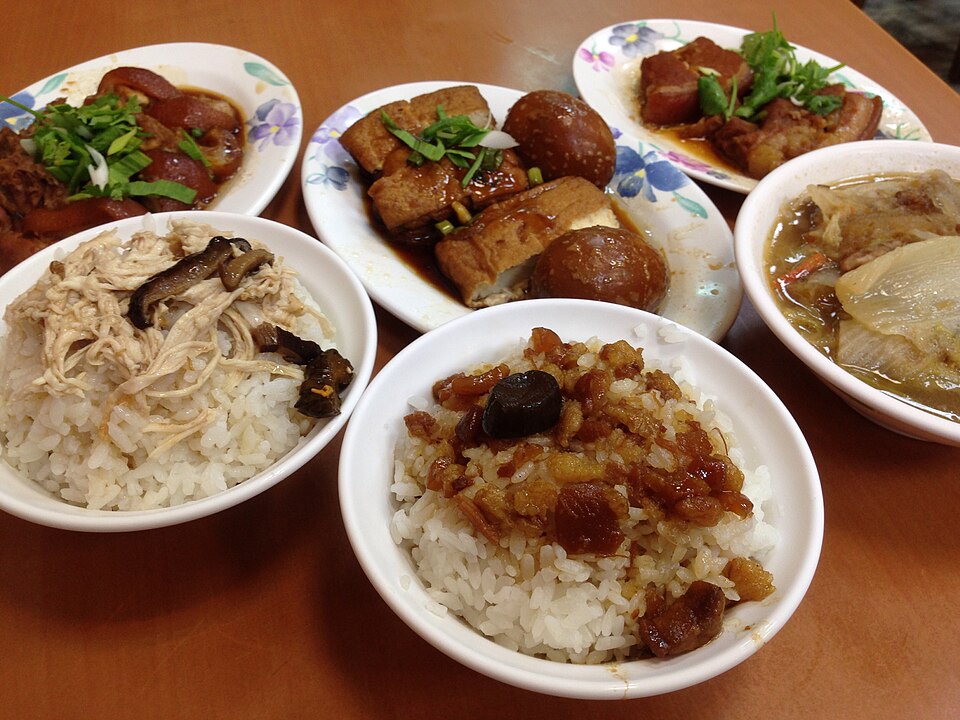
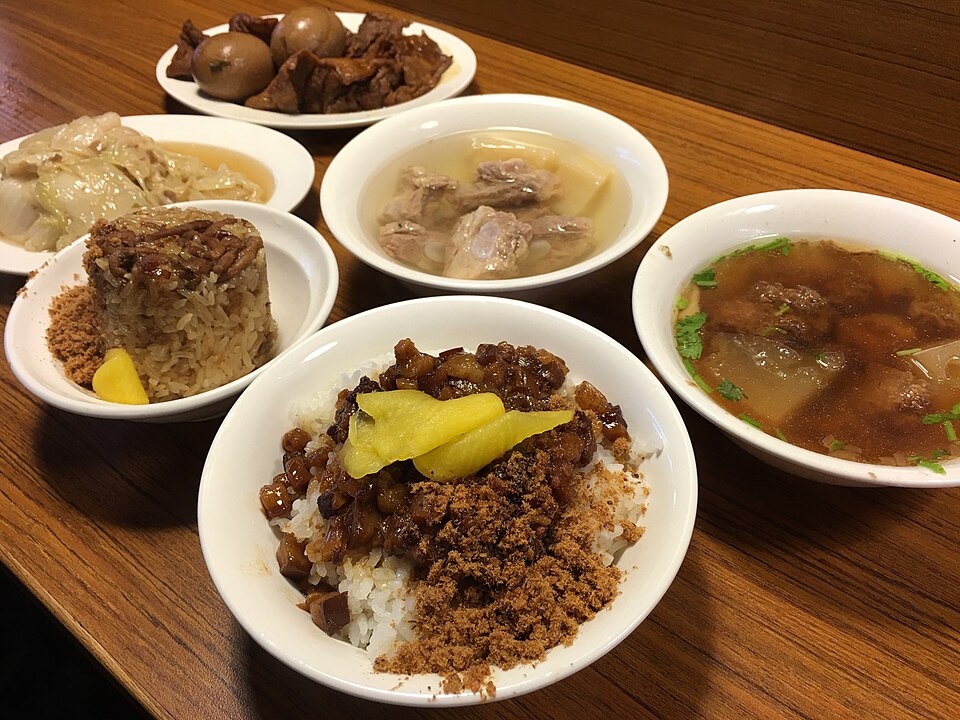
What it is
Napa cabbage (大白菜) cooked with dried flatfish (扁魚). The fish is fried until crisp, which gives it a deep, toasty, savoury smell, and the sweet cabbage soaks up that flavour. Garlic, dried shrimp and mushrooms often go in too. The closely related cabbage stew baicai lu (白菜滷) usually adds puffed fried pork skin.
Where it came from
Cabbage stewed with flatfish was a classic of early bando (辦桌) banquets. Dried flatfish was costly, and ordinary households seldom bought it, so most people tasted the dish only when a banquet chef cooked it. One 86-year-old recalled that those chefs were masters at frying flatfish, and that the smell carried a long way.
The banquet version simmered flatfish and cabbage with chicken bones. Later cooks added fried, sun-dried pork skin (膨皮), and later still shredded pork loin. Over time the plain cabbage stew turned into the thick 'shark fin' soup (魚翅羹) still served at banquets, a name used even when no shark fin goes in.
How it is made
The flatfish goes into oil over gentle heat and fries slowly until crisp. Finely chopped garlic follows. The cabbage is boiled until soft, drained, then mixed with the fish and garlic and steamed for about half an hour. Restaurant versions vary: some keep the cabbage crisp and add spring onion, dried shrimp, carrot and mushrooms.
How to eat it
It is the shared vegetable dish at a Taiwanese meal, eaten with rice. Menus may list it as 扁魚白菜 or with the prefix 台味 ('Taiwanese-style'). Some restaurants also make it into a hotpot with pork.
Around Taiwan
- Tainan
- Eat to Fat (添厚), near the Grand Matsu Temple, lists 台味扁魚白菜 with crisp, sweet cabbage. Flatfish and napa cabbage also form the base of the claypot duck at A Mei Restaurant (阿美飯店), still simmered over charcoal.
- Central
- In Tuku, Yunlin, Chuan Long Shitang (川龍食堂) makes flatfish and cabbage hotpot (扁魚白菜火鍋) its signature, with a light broth of flatfish, dried shrimp, mushrooms and cabbage.