What it is
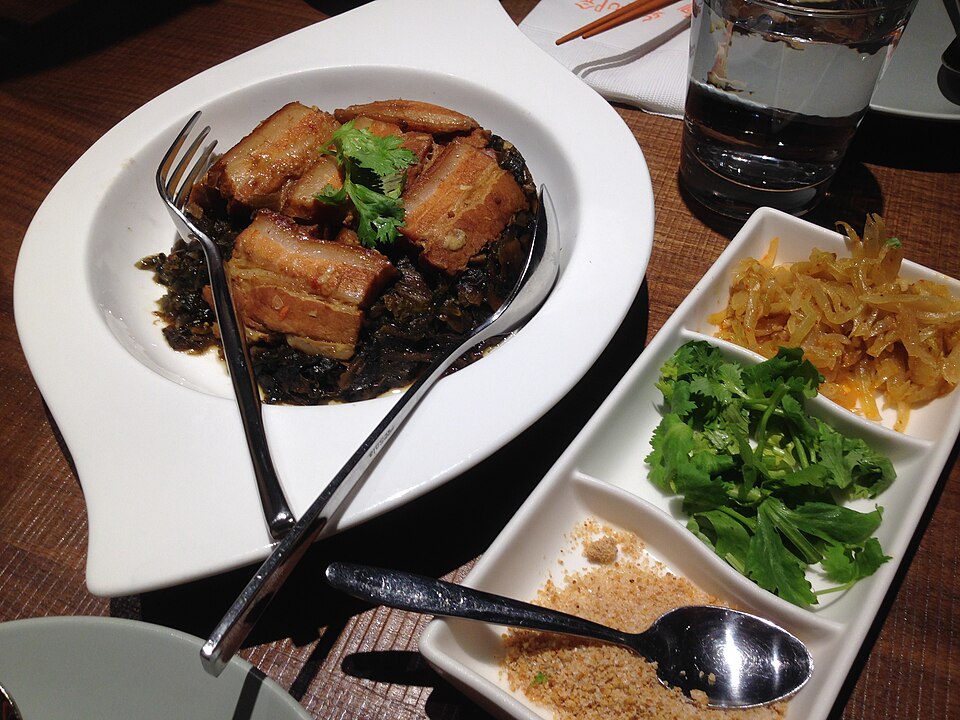
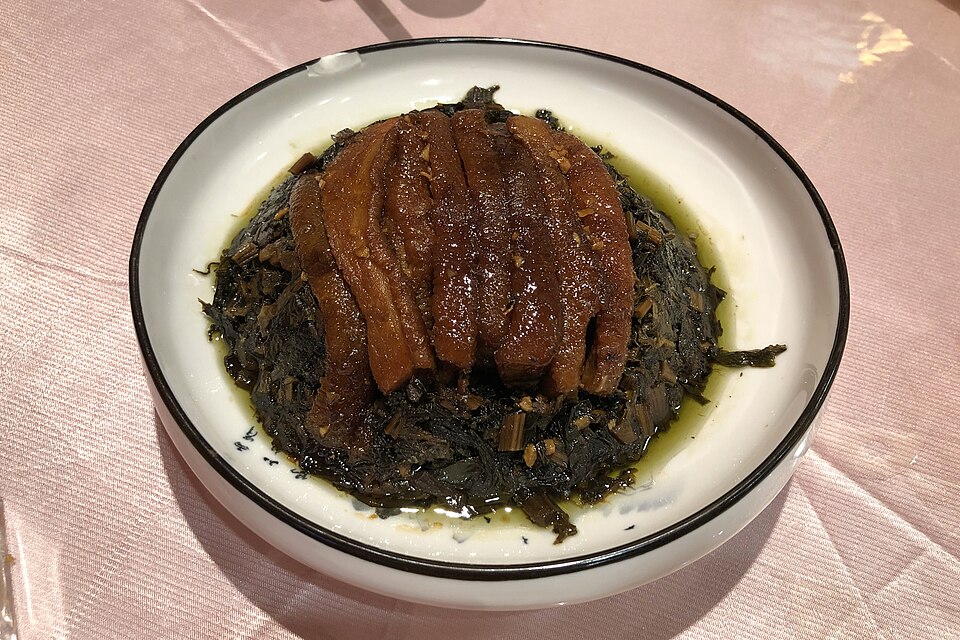
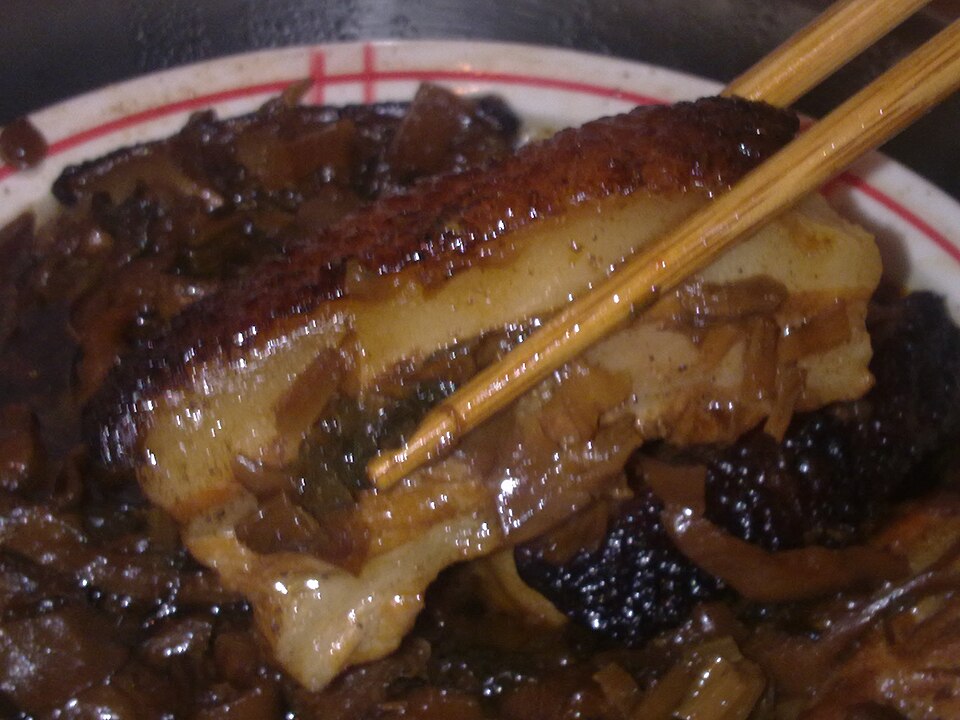
Taro kou rou (芋頭扣肉) pairs fatty pork belly with thick slices of fried taro. The two are packed in alternate layers in a bowl, steamed, then turned upside down onto a plate, which is what 扣 refers to. The taro soaks up the fat and sauce. The other common version uses preserved mustard greens (梅菜扣肉).
Where it came from
Kou rou is a dish of southern China, and the taro version is usually described as a traditional Hakka dish from Guangdong. It often appears on Chinese New Year tables. Steamed and inverted meat belongs to a wider family: Sichuan's shao bai (燒白), part of the banquet repertoire known as 'three steamed, nine inverted' (三蒸九扣), is comparable.
How it is made
The belly is simmered, then its skin is pricked, brushed with dark soy and fried until crisp. Taro is sliced and fried golden. The pork is cut into thick slices and marinated in a sauce that often includes red fermented bean curd, soy, rice wine and five-spice. Pork and taro go into a bowl in alternating slices and steam for about an hour and a half. The juices are poured off and thickened, the bowl is turned onto a plate, and the gravy goes over the top.
How to eat it
It is a shared dish for the table, eaten with plain rice, and a regular at Chinese New Year. Spoon some of the gravy over the rice. In Jiaxian, look for the version with bamboo shoots (芋頭筍絲扣肉).
Around Taiwan
- Kaohsiung
- Jiaxian, in Kaohsiung's hills, grows areca-heart taro (檳榔心芋), dense enough to hold its shape through long cooking, and giant bamboo shoots. Syan Syang (仙香飲食店), a mountain-food restaurant there since 1971, adds shredded bamboo shoots to its version (芋頭筍絲扣肉).