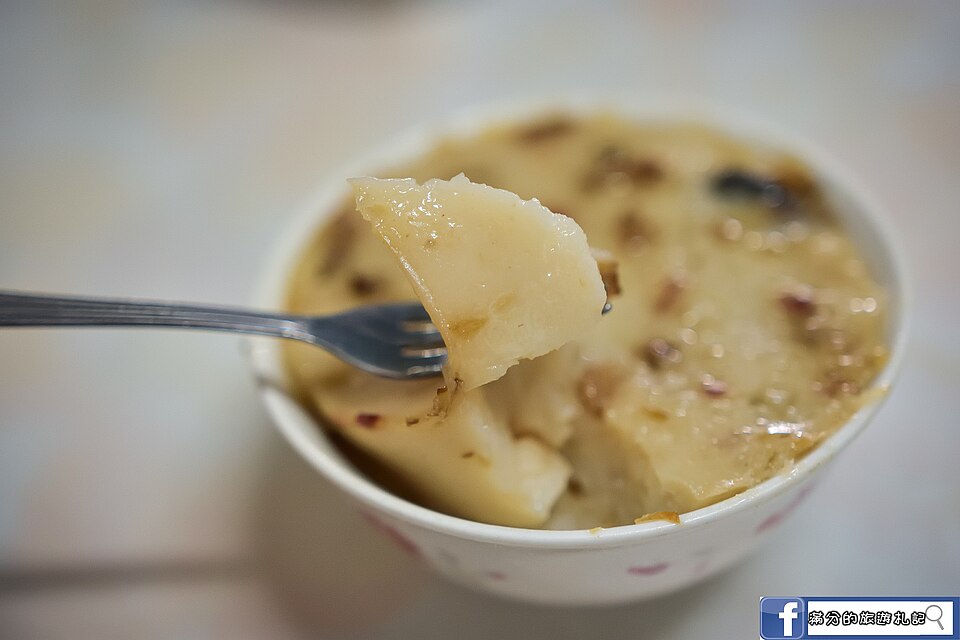
What it is
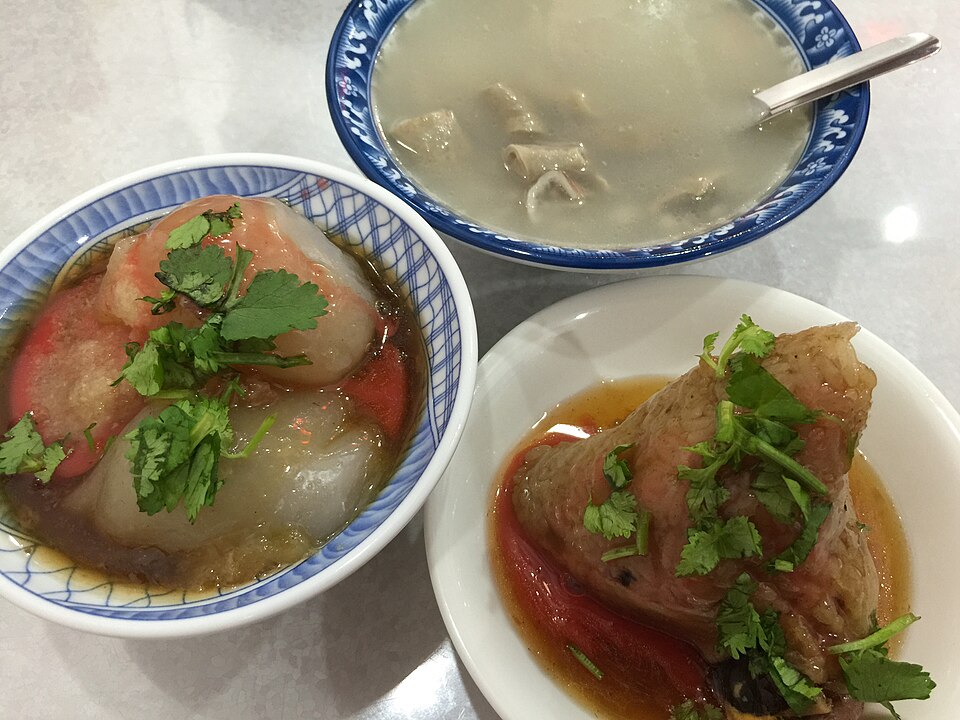
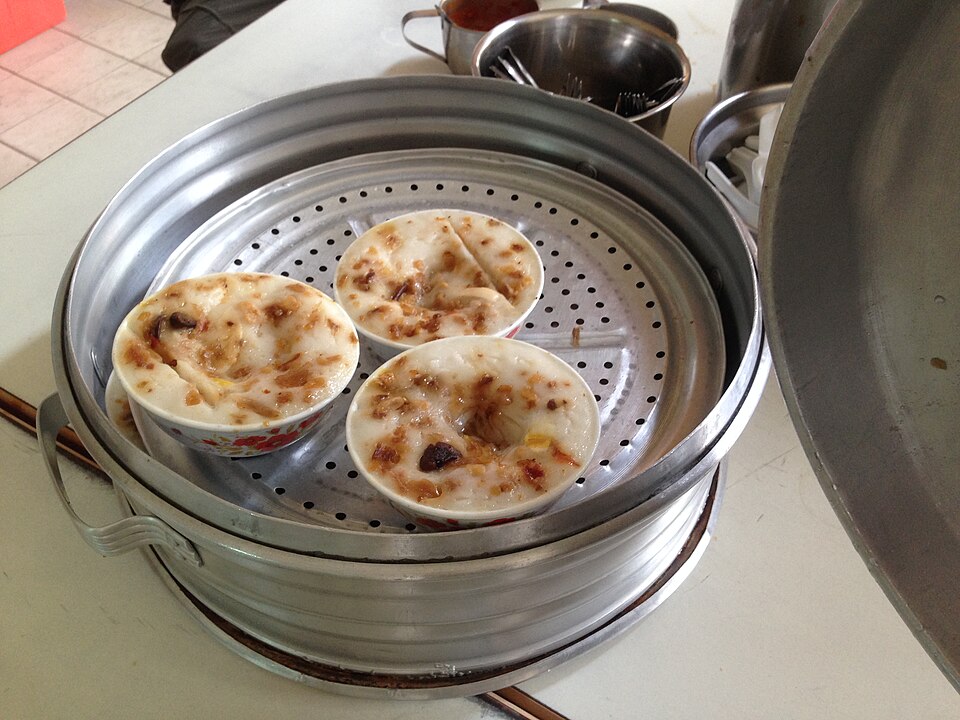
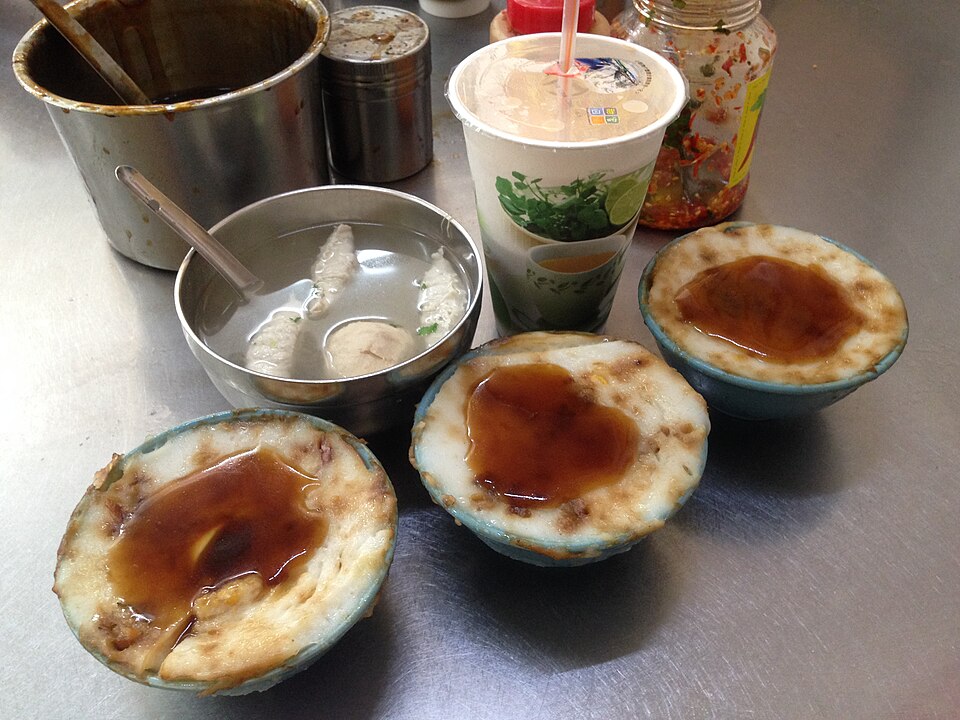
Wagui (碗粿) is rice batter steamed in its serving bowl: "gui" (粿) is a family of rice foods and "wa" (碗) means bowl. Most are savoury, holding preserved radish (菜脯), pork, dried shrimp or half a braised egg under soy paste or sweet chilli sauce. Some regions mix sauce into the batter, turning it dark brown.
Where it came from
Nobody has pinned down when or where wagui began. The Taiwanese history writer Tsao Ming-tsung (曹銘宗) points out that Qing-dynasty documents mention neither 碗粿 nor 碗糕, while a Taiwanese-Japanese dictionary from the colonial era (台日大辭典) lists 碗糕 but not 碗粿. He concludes that both names have been in use since that period and guesses the difference may once have been regional. 碗粿 is now the usual name. Chinese Wikipedia calls 碗糕 a mistake, yet the Ministry of Education's Taiwanese Hokkien dictionary gives 碗糕 its own entry for the same snack.
Because gui sounds close to the Taiwanese Hokkien word for nobility (貴), rice cakes such as wagui are a common offering to gods and ancestors.
Similar steamed rice cakes are found beyond Taiwan. Wagui is linked to shui kueh (水粿), traced to the Chaoshan region and also eaten in Singapore, Malaysia and among Taiwan's Hakka.
How it is made
The base is indica rice (在來米), ground with water into a batter or milled to flour and mixed with hot water. The batter is warmed over a low flame, stirred constantly until it begins to thicken, then ladled into bowls with the fillings and steamed. Some cooks steam the plain batter first, then add the toppings and steam again. Southern cooks often stir in sauce or braised pork gravy beforehand. Cooks traditionally let the cakes cool overnight for a soft yet springy texture.
How to eat it
In Tainan wagui is a breakfast staple, and one well-known shop usually sells out before noon. It comes already sauced with soy paste, sweet chilli, a garlic sauce or a house blend. Hamasen's Wa-Gui Zhi in Kaohsiung hands out its own whittled bamboo skewers to eat it with. Tainan's usual partner is milkfish thick soup (虱目魚羹).
Around Taiwan
- Tainan
- Tainan is known for black wagui (黑碗粿). Braised egg, shrimp, shiitake and minced pork steam inside the batter, colouring it brown, and sweet soy paste goes on afterwards. Yi Wei Pin (一味品) makes it far darker than Taipei versions. Madou district is also known for wagui.
- Kaohsiung
- Hamasen's Wa-Gui Zhi (哈瑪星碗粿枝), founded in 1951, now in its fourth generation, grinds aged indica rice each morning and steams the pale, springy cakes for half an hour. A dark soy, herb and garlic sauce sits on top without sinking in. The young owner finds Tainan's versions oilier and saltier.
- North
- Most northern entries in a 2018 national contest were Hakka-style water rice cake (水粄): plain indica batter steamed white and soft, with sauce and fried preserved radish on top.
- Central
- Central Taiwan mixes the northern and southern methods. In the same contest, central entries mostly kept the cake white but hid mushroom, pork and salted duck egg yolk inside.
- South
- Southern cooks usually stir braised pork sauce or a soy base into the batter before steaming, so the cake comes out deep yellow to coffee brown. Pork, mushroom or salted egg yolk cook in the bowl with it.
- Hakka
- Hakka cooks make a sweet wagui with dark brown sugar in the batter. A savoury Hakka style sold in northern markets is steamed unseasoned until smooth and white, then topped with minced pork, pickled radish and soy sauce.