What it is
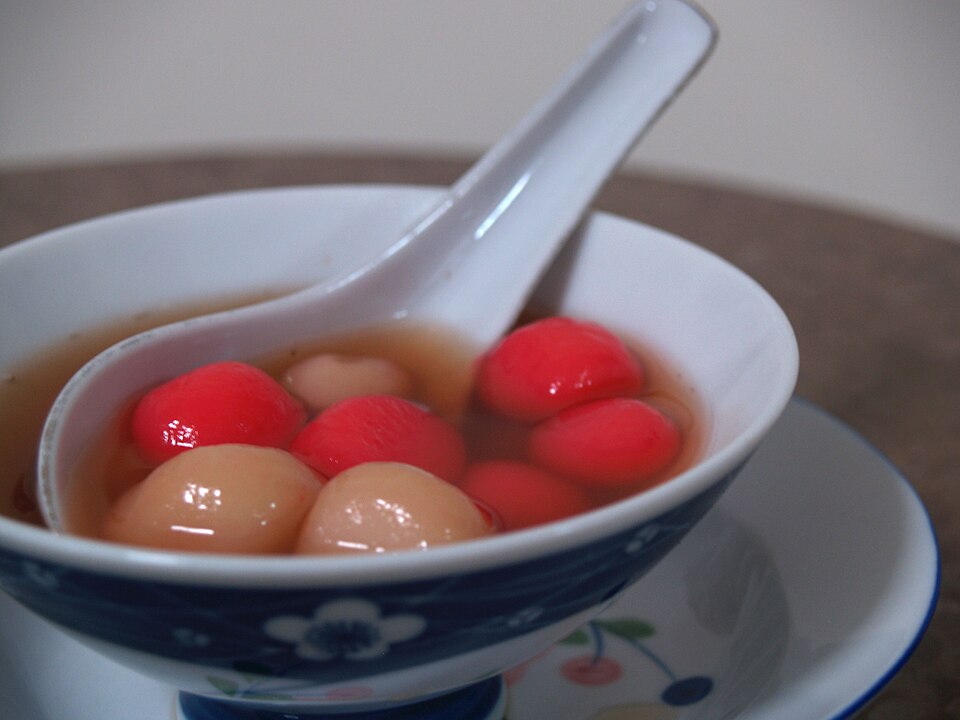
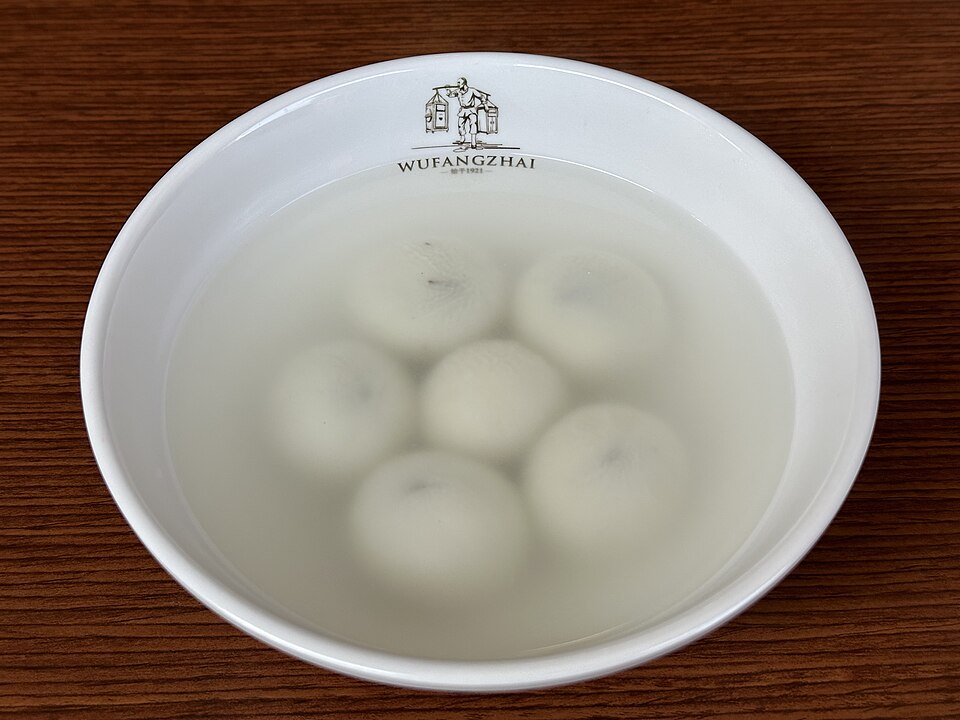
Tangyuan (湯圓), usually called 圓仔 in Taiwanese Hokkien, are small balls of glutinous rice dough cooked and served in a sweet soup. Plain ones often go into red bean or peanut soup, or over shaved ice. Filled ones hold sesame or peanut paste. Hakka cooks make savoury versions in broth.
Where it came from
Glutinous rice balls have been eaten in China for centuries under several names. In the Ming dynasty, northern China called them yuanxiao (元宵). A popular story says Yuan Shikai, who ruled China from 1912 to 1916, disliked that name because it sounded like "remove Yuan" and had it changed to tangyuan.
The word sounds close to tuanyuan (團圓), reunion, so the balls stand for family togetherness. They belong to the Lantern Festival and the winter solstice (冬至). In Taiwan, solstice tangyuan come in red and white, red for luck and white for good relations, and people are told to eat an even number. Older relatives say eating them makes you a year older, a relic of the solstice once marking the new year. Households used to stick rice balls on their doors at the solstice as an offering to the door gods. The earliest Minnan tangyuan had no filling and were simply boiled in brown sugar water.
How it is made
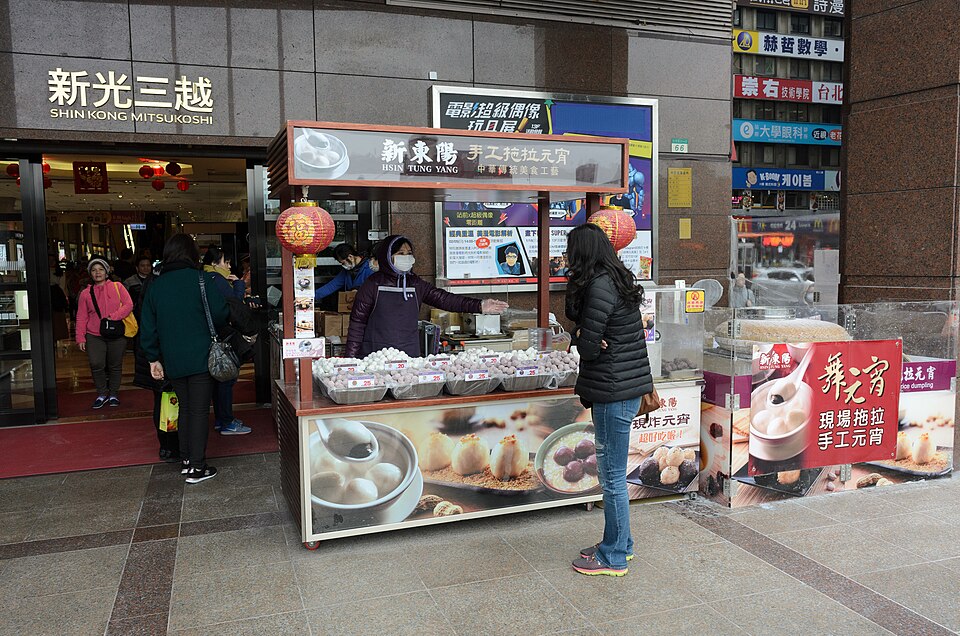
Glutinous rice flour is wetted and kneaded into dough, then rolled into balls by hand. For filled ones, a piece of dough is pressed flat, wrapped round the filling and rolled smooth. Yuanxiao are built the other way round: small pieces of firm filling are rolled in a sieve of dry rice flour, dampened and rolled again, ten to fifteen times, until a coat forms. Some shops still grind their own rice every morning.
How to eat it
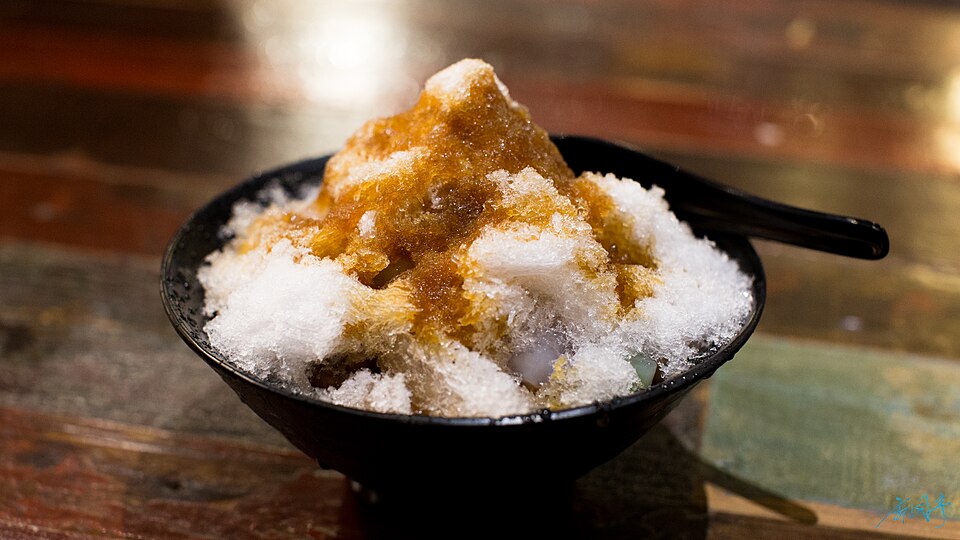
Dessert shops serve plain rice balls in red bean soup, peanut soup or syrup, either hot or cold, and also spoon them over shaved ice. Order the soup you want and the balls come in it. At the solstice families eat red and white ones at home. Hakka salty tangyuan (鹹湯圓) come in a savoury pork broth.
Around Taiwan
- Kaohsiung
- Li Family (李家圓仔湯), at the entrance to Yancheng No. 1 Public Market, has sold only four things since 1953: red bean soup, peanut soup, rice-ball soup and mixed ice. The rice is ground each morning and the syrup made with light brown sugar (二砂).
- North
- In Taipei, Shih Family (施家鮮肉湯圓), a 2022 Bib Gourmand pick that started at the roadside in the 1960s, fills its salty tangyuan with black-pork hind leg and serves them in broth with celery and chives.
- Central
- Taichung's Qin Yuan Chun (沁園春), founded in 1949, makes yuanxiao with a lard filling and sells them to take home at Lunar New Year and the winter solstice.
- Hakka
- Hakka tangyuan are savoury. In northern Hakka areas, plain balls cook in a broth of stir-fried pork, dried shrimp, shiitake and garland chrysanthemum (茼蒿), topped with fried shallots. Southern Hakka cooks wrap those ingredients inside the dough instead.