What it is
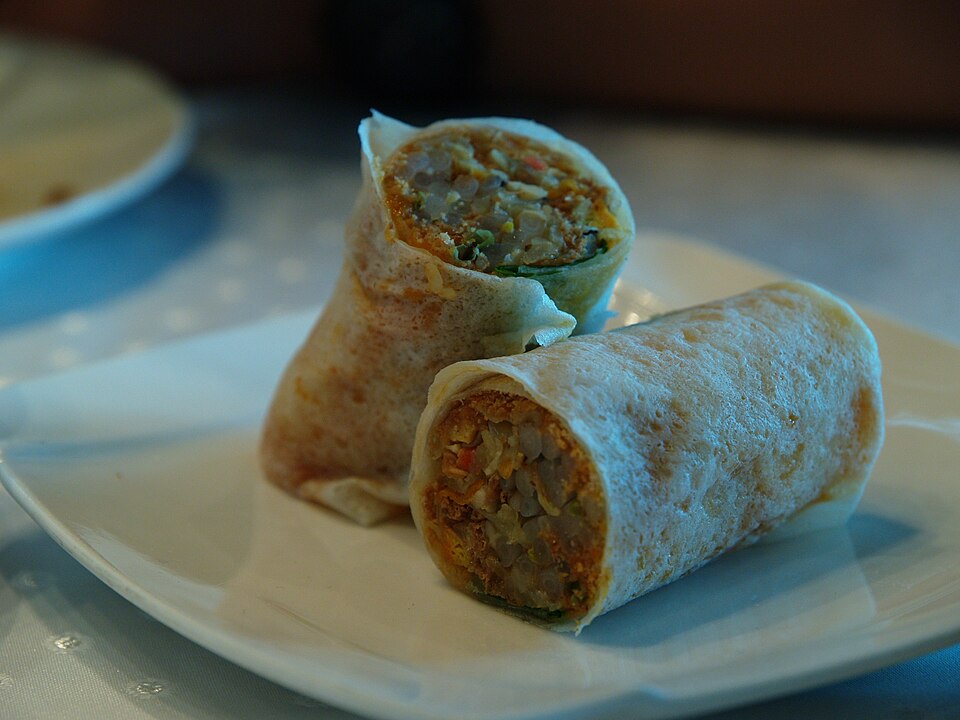
Run bing (潤餅, Taiwanese Hokkien jūn-piánn) is a fresh spring roll: a paper-thin wheat crêpe wrapped round cooked vegetables, meat and egg and eaten by hand. Unlike the fried kind, it is not cooked after rolling. Typical fillings are cabbage, bean sprouts, carrot, sausage, dried tofu, pork and shredded omelette, finished with peanut powder, sugar and coriander. In the south it often goes by chun juan (春捲).
Where it came from
The roll comes from the Hokkien and Teochew cooking of southern Fujian and Chaoshan, where it is called popiah or lun-piã. Taiwan's large Hoklo population made it common here, and the Philippine word lumpia comes from the same Hokkien name.
The usual explanation links it to the Cold Food Festival (寒食), when lighting fires was banned and people ate dishes that needed no heating. That festival falls just before Qingming, so the habit carried over. Families still gather on tomb-sweeping day to roll and eat run bing, sometimes at the graveside after tidying the tombs. The late food writer Han Liang-lu (韓良露) recorded two other tales: one says the rolls were devised for ancestor offerings when the Mongols invaded southern China, the other that a Ming-dynasty woman named Lee (李) created them as quick food for her soldier husband.
In northern Taiwan some families also eat run bing at a household year-end feast before Lunar New Year, a custom traced to Tong'an in Fujian.
How it is made
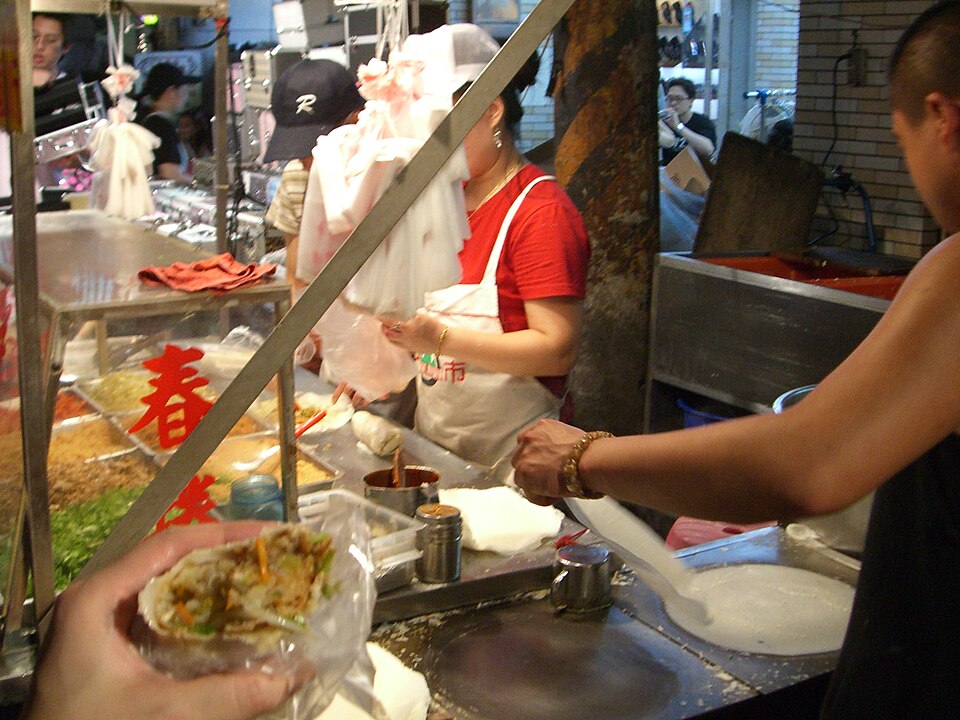
The wrapper begins as a very wet, stretchy dough of flour and water. The cook grips a ball of it and smears it round a hot steel griddle in one quick sweep. A thin film sticks, sets within seconds and is peeled away, and practised makers keep two or three griddles going at once. The fillings are cooked separately and set out on plates. A wrapper is laid flat, topped with fillings and peanut powder, then rolled into a firm cylinder.
How to eat it
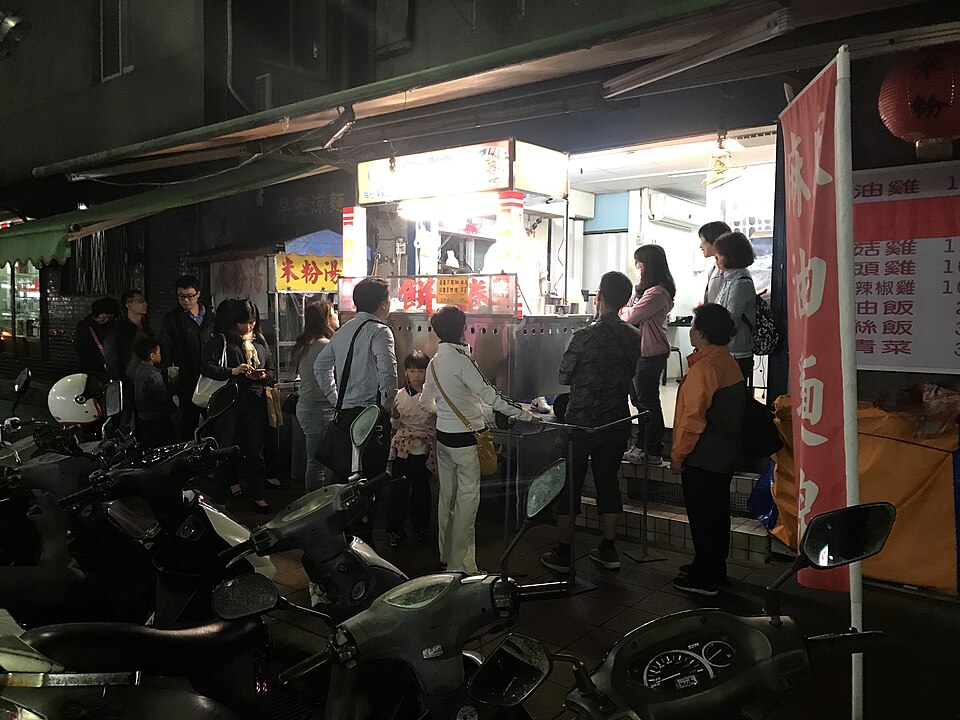
At home it is a build-your-own meal, especially at Qingming, with everyone filling a wrapper from shared plates. Stalls and night markets sell ready-rolled ones all year. The roll is eaten by hand. Some stalls ask how sweet the peanut powder should be.
Around Taiwan
- Tainan
- In Xinying and Baihe, cooks often add dou cai mian (豆菜麵), a local noodle. Han Liang-lu remembered her Tainan mother and grandmother laying out almost 20 dishes of fillings.
- Kaohsiung
- San Dai Spring Rolls (三代春捲), outside Formosa Boulevard MRT station, has rolled run bing for more than 60 years. It makes its wrappers overnight and tucks a scrap of wrapper inside each roll so the juices do not split it.
- North
- Northern rolls tend to be moister and less sweet, often with red-yeast pork (紅糟肉), fried egg crumbs (蛋酥) and little sugar. In Yilan the same wrapper holds peanut ice cream rolls: shaved peanut brittle, ice cream and a sprig of coriander.
- South
- Southern rolls are drier and sweeter, with plenty of sugared peanut powder and fillings such as braised pork, sausage, shrimp and shiitake. Some add yellow oil noodles (油麵), which a number of southerners remember from their grandmothers' rolls.