What it is
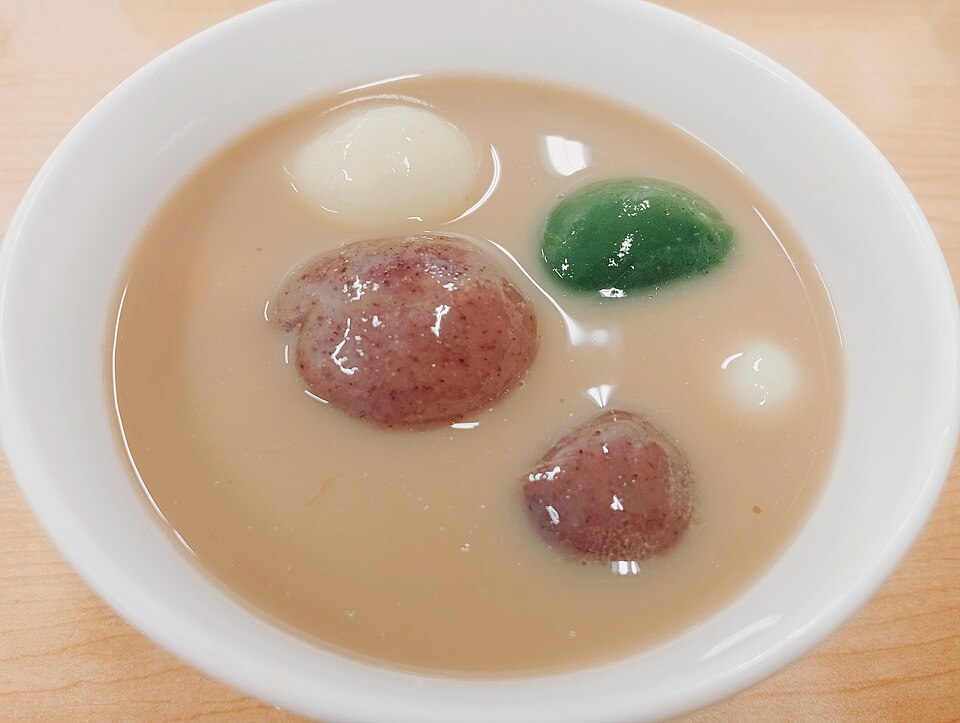
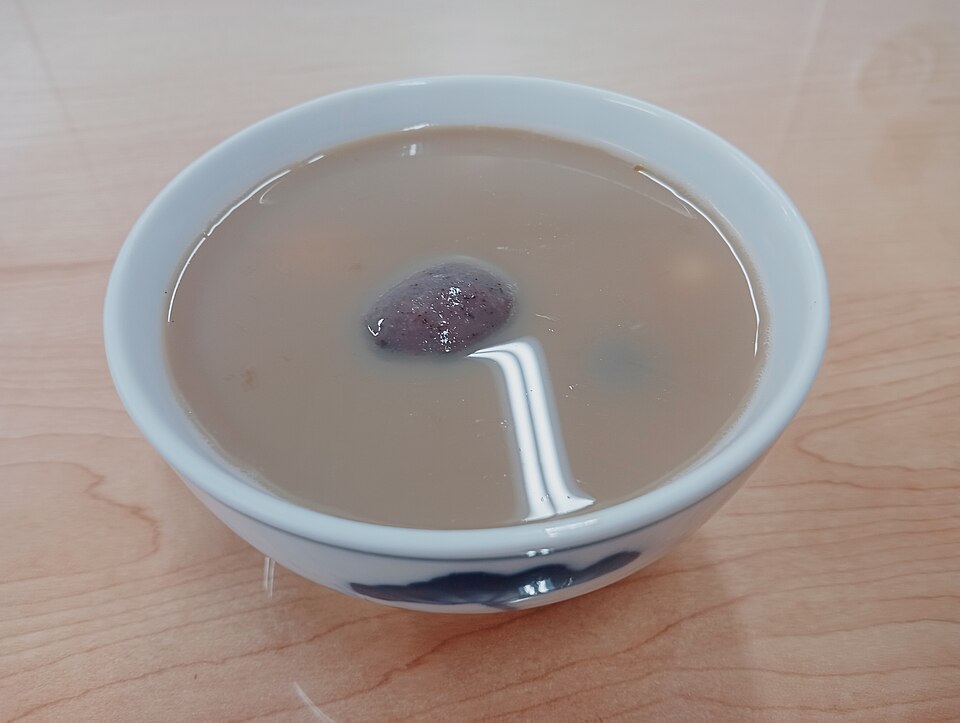
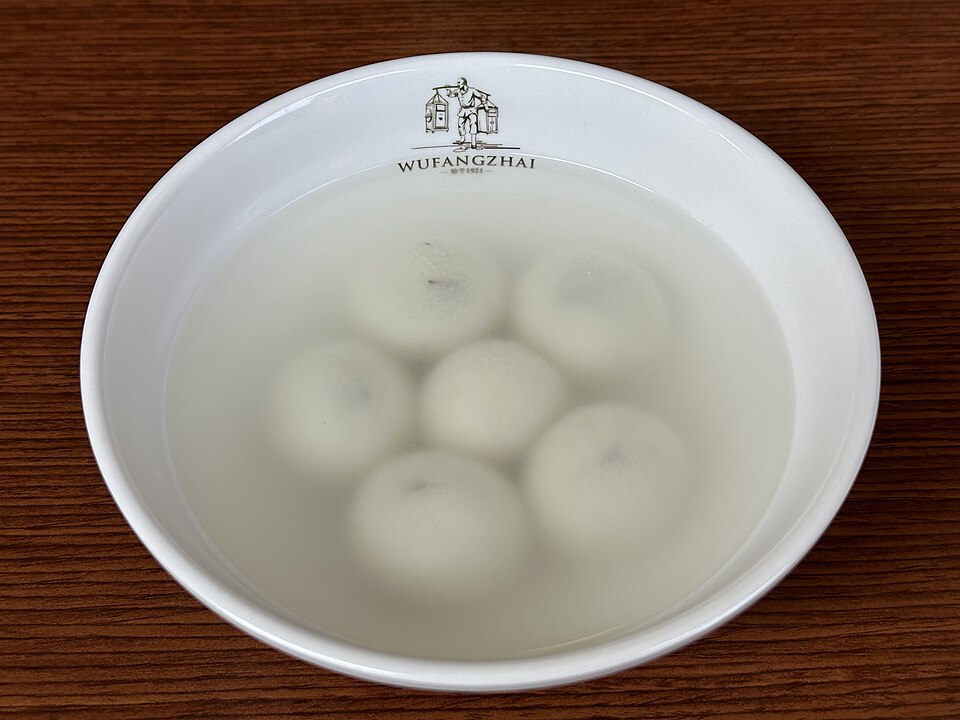
Savoury tangyuan (鹹湯圓) are chewy balls of glutinous rice dough cooked in a salty broth instead of sweet syrup. The broth usually carries fried pork strips, shiitake, dried shrimp and garland chrysanthemum (茼蒿). Some bowls hold small plain balls. Others have larger balls stuffed with seasoned minced pork, sometimes sold as 肉湯圓.
Where it came from
In Taiwan, tangyuan belong above all to the winter solstice (冬至), which was once treated as the start of the year. That is why people say eating them adds a year to your age (吃湯圓長一歲). The name sounds like the word for reunion (團圓), so the balls also stand for a family gathered together.
The oldest tangyuan had no filling. They were small balls in two colours: red for joy and white for good relations. Families were told to eat an even number, as an odd one could leave you on your own, in luck and in love, in the year ahead. Some households once stuck a ball on the door for the door gods.
Hokkien families mostly boil the plain balls in brown sugar water. Hakka families make them savoury with meat and vegetables. The Hakka writer Fan Chiao-hsin (范僑芯) goes as far as saying that without Hakka tangyuan the solstice is no festival at all. The Hakka names change from place to place, from 雪圓 in Taoyuan to 粄圓 in Hsinchu and Miaoli.
How it is made
The dough is glutinous rice flour and water. Hakka cooks scald part of the dough and knead this cooked lump (粄母) back in, which makes it easier to shape and gives a better bite. The balls are boiled in salted water until they float. For the broth, soaked shiitake, pork strips and dried shrimp are fried in oil with fried shallot (油蔥酥), then simmered in bone or chicken stock. Garland chrysanthemum goes in last, with celery or Chinese chives. For filled balls, the same stir-fried mixture is wrapped inside the dough.
How to eat it
Hakka homes cook it for the winter solstice, and some snack shops serve it every day. Garland chrysanthemum and shallot matter as much as the balls, so many cooks are generous with the toppings. Filled balls are sometimes eaten dry, without broth. At Ching Hsi in Kaohsiung it also comes in a mixed soup (綜合湯) with shrimp balls and pork balls.
Around Taiwan
- Kaohsiung
- Ching Hsi Snack Shop (清溪小吃部) on Sanfeng Middle Street (三鳳中街), the city's dried-goods and New Year shopping street, has sold pork tangyuan for six decades or more. Balls and meatballs are rolled by hand daily and served in a pork-bone broth.
- Hakka
- Northern Hakka cooks, as in Hsinchu, keep the balls small, unfilled, red and white, with the toppings in the broth. Southern Hakka usually stuff them with pork, shallot, shiitake and dried shrimp, and in the Liudui (六堆) area call them 圓粄. Miaoli has large balls filled with dried radish.