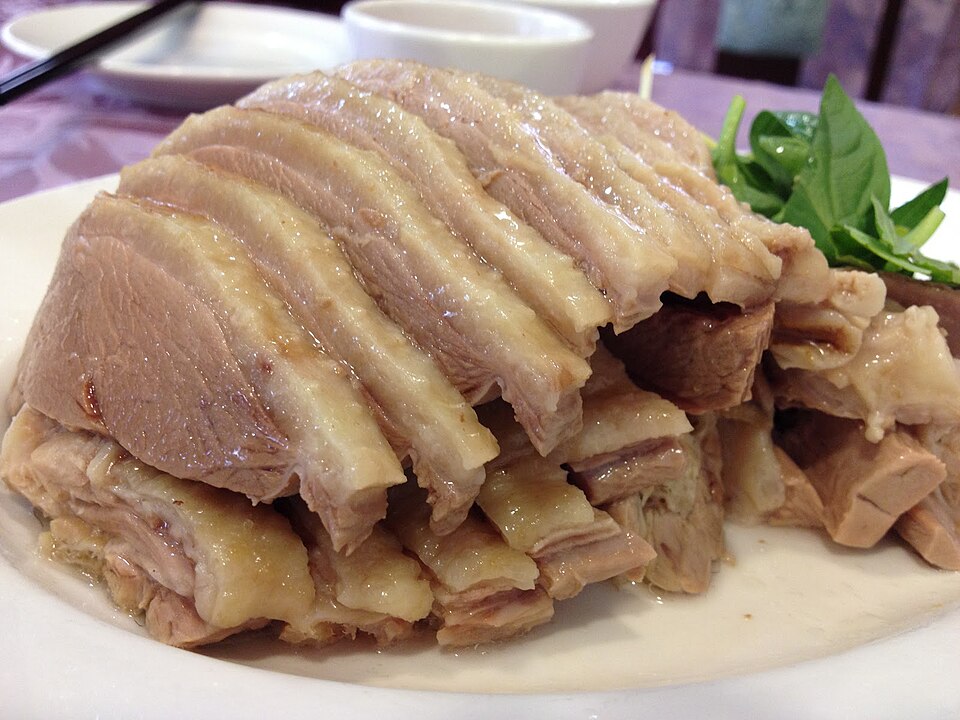
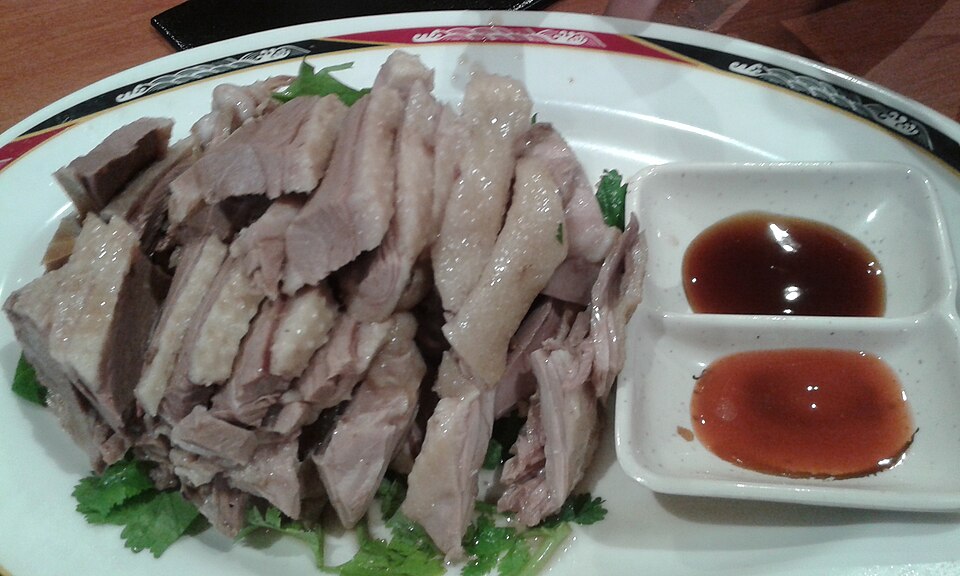
What it is
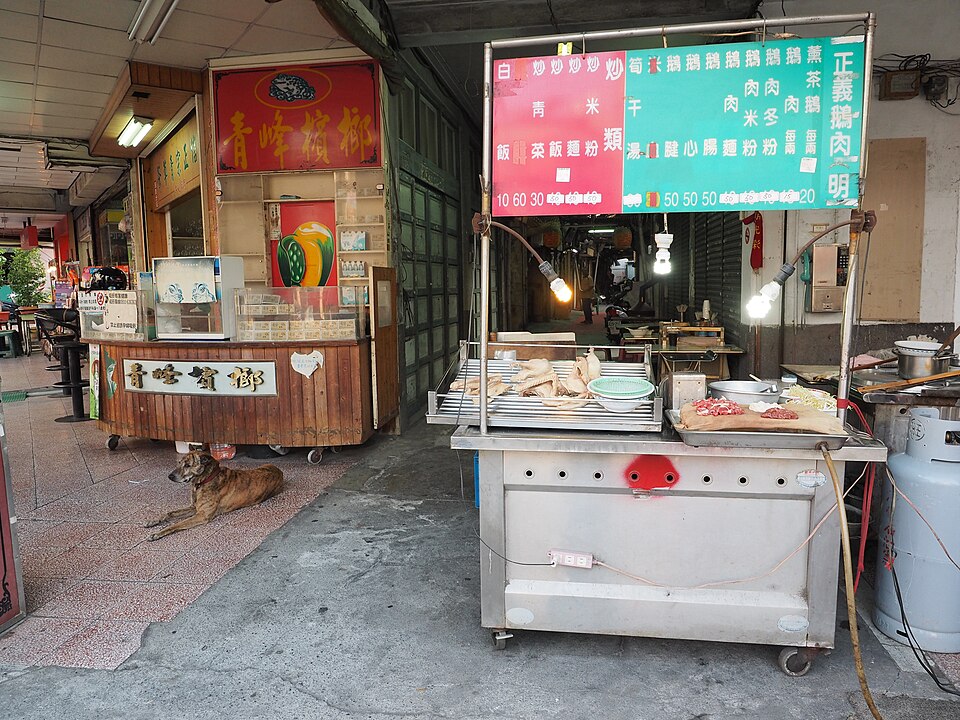
Salt-water goose (鹽水鵝, also written 鹹水鵝) is the plainest Taiwanese way with goose. The bird is cooked gently in brine, cooled and carved with the skin on, so the flavour of the meat leads. It is the basic dish of goose shops (鵝肉店) across Taiwan, sold beside smoked goose, goose offal and goose rice or noodles.
Where it came from
The dish rests on a large home goose industry. Figures from the Taiwan Goose Association put the trade at about 1,000 farmers and some four million birds sold a year at home, nearly 98 per cent of them White Roman geese. Yunlin is the centre of farming, and its Sihu (四湖) and Dongshi (東勢) townships produce more than half the national output. Chiayi, Tainan and Pingtung also raise many geese. The White Roman grows fast and is ready for slaughter at about three months. Goose meat is seasonal in one respect: the birds carry more fat in winter.
How it is made
Shops use young birds, usually 90 to 120 days old, and some butcher them on the day they cook them. The goose is simmered in brine rather than boiled hard, which keeps the meat from toughening, and some kitchens sort birds by size into pots with different timings. Afterwards the goose cools, sometimes in a cold water bath that tightens the skin for carving. Goose shops also cook the gizzards, intestines and hearts, and make goose blood cake.
How to eat it
It is ordered as a shared plate alongside goose rice, noodles and side dishes. Portions run from a single serving to a quarter, half or whole bird. Choose leg for richer, juicier meat or breast for a meatier flavour. Some shops pile the plate with chives and bean sprouts. Offal such as intestine, gizzard and heart, plus goose blood cake, makes a common side.
Around Taiwan
- Tainan
- Wenpapa Goose (溫爸鵝肉) in North District is run by a chef with over 20 years of goose cooking, who brines 90- to 100-day-old birds. In Xiaying (下營), where farmers took up Danish geese in 1975, most meat geese become smoked tea goose (燻茶鵝) instead.
- Kaohsiung
- Qiaobian Goose (橋邊鵝肉), listed in English as Le Pont, opened in 1999 beside the Caogong Canal (曹公圳) in Renwu. It sells salt-water goose and roast goose, with Tainan shallots fried in its own goose oil, a condiment the family now bottles.
- North
- A Cheng Goose (阿城鵝肉), founded in Tucheng, New Taipei, in 1990, uses Yunlin geese of 100 to 120 days. Most of its customers order goose smoked over sugarcane, though chopped poached goose is also on the menu.
- Central
- Yunlin raises more geese than anywhere else in Taiwan, and the Taiwan Goose Association holds its annual goose cooking contest in Gukeng (古坑) Township.
- Hakka
- At a Hakka goose farm in Xinwu (新屋), Taoyuan, white-cut salt-water goose is served with a Hakka dip of basil and yellow soybean paste (九層塔黃豆醬). Goose fat goes into fried noodles and rice noodles.