What it is
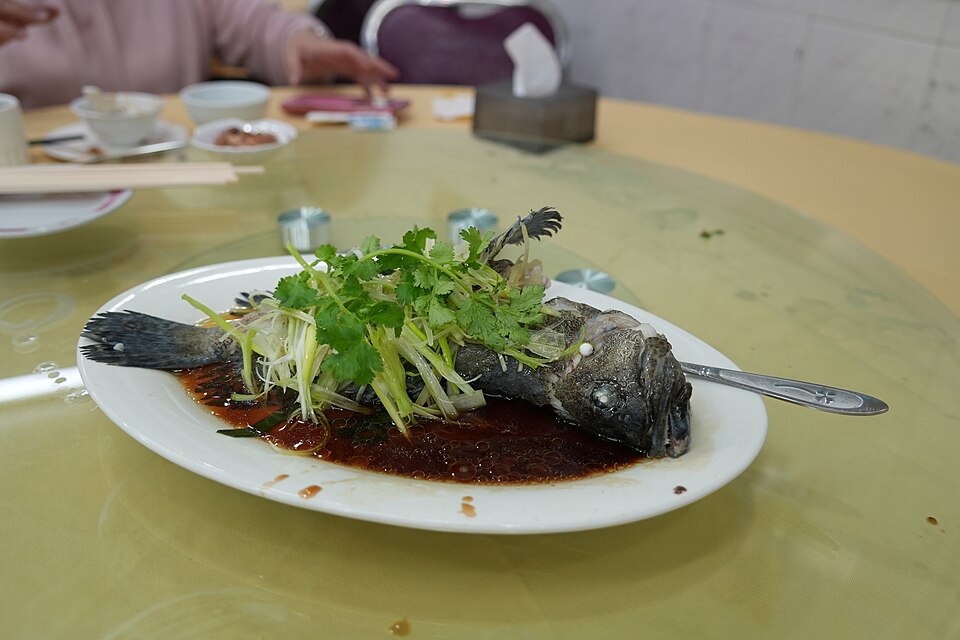
Grouper (石斑魚, shíbān yú) are large reef fish, and Taiwan is one of the world's main grouper farmers. Salt steaming (鹽蒸) seasons the fish mainly with salt before it goes into the steamer, so the sweetness of the flesh comes through. The skin is the prize, thick with collagen and soft as jelly once cooked.
Where it came from
Grouper farming in Taiwan began in 1975 with ocean ranching, in which young fish caught in the wild were grown on to market size. In 1995 a private company working with a marine research centre worked out how to hatch the giant grouper (龍膽石斑, Epinephelus lanceolatus). In the 2000s Taiwan became a world leader in grouper farming, and in 2007 its farms produced more than 17,000 tonnes. Much of it travels live to Hong Kong and mainland China in purpose-built ships.
The giant grouper is the largest species and the most valuable, known as the king of groupers (石斑之王). Market fish weigh about 20 catties, some 12 kilograms. China suspended imports of Taiwanese grouper in 2022.
How it is made
The fish is seasoned with salt and steamed to order, which keeps the flesh sweet and sets the skin to a soft, sticky jelly. Cooks match the method to the species. The mouse grouper (老鼠斑) and leopard coral grouper (七星斑) suit steaming, while the firmer giant grouper and 龍虎斑 often go into stir-fries and braises, though some kitchens steam giant grouper too.
How to eat it
Order it as one of several shared plates at a seafood restaurant, with rice or congee on the side. The gelatinous skin goes well with the salty juices left on the plate. Ask for 鹽蒸石斑 when ordering.
Around Taiwan
- Tainan
- Xie Shopkeeper (謝掌櫃) in Anping opened in 2018 and cooks old-style dishes to order. Its salt-steamed grouper is noted for sweet flesh and collagen-rich skin. The signature is a milkfish congee loaded with fish skin, fish balls, shrimp, clams and cuttlefish.