What it is
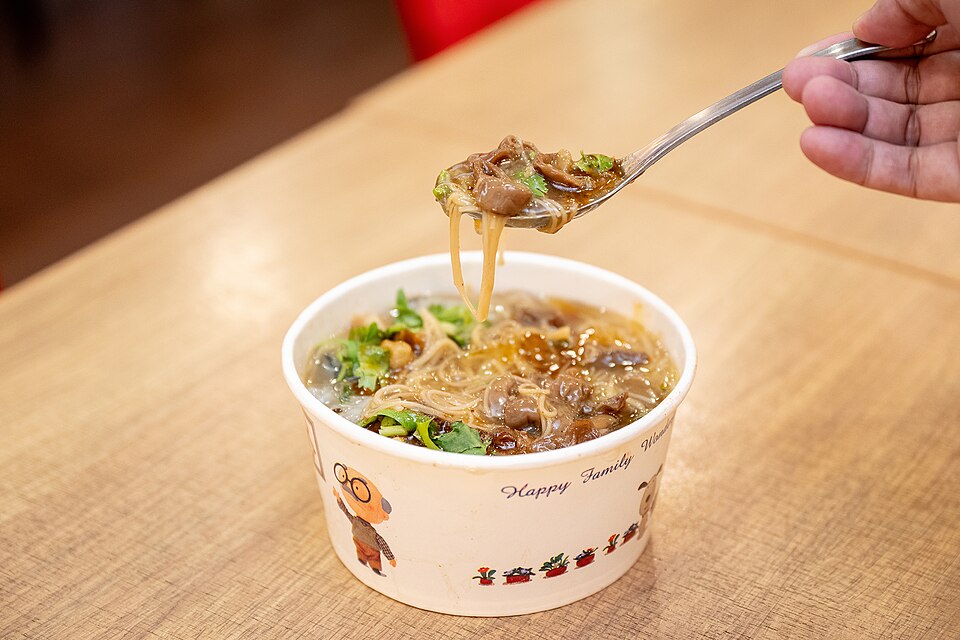
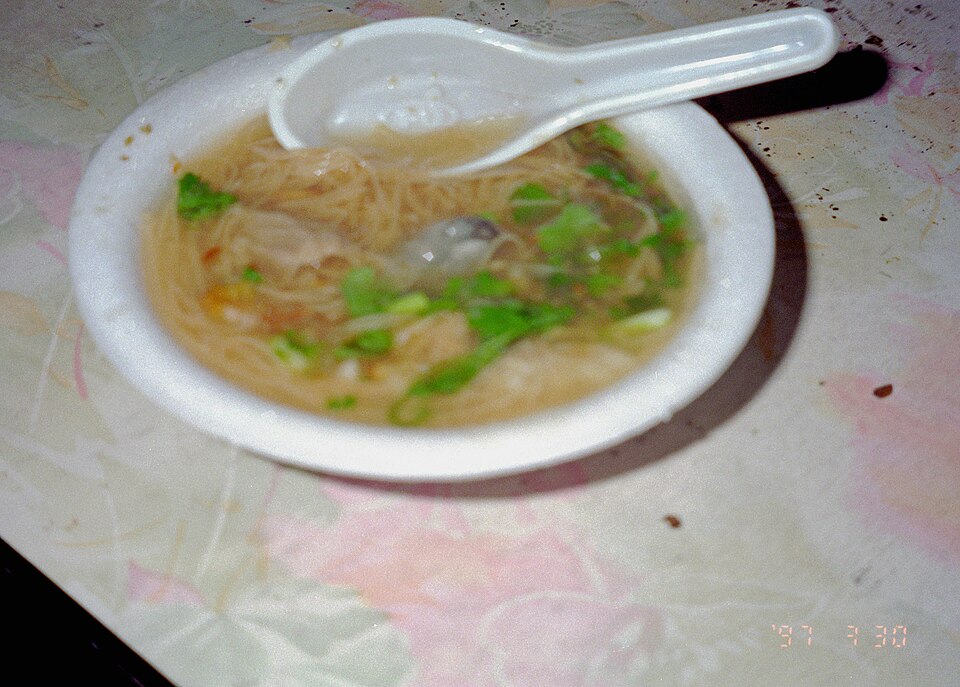
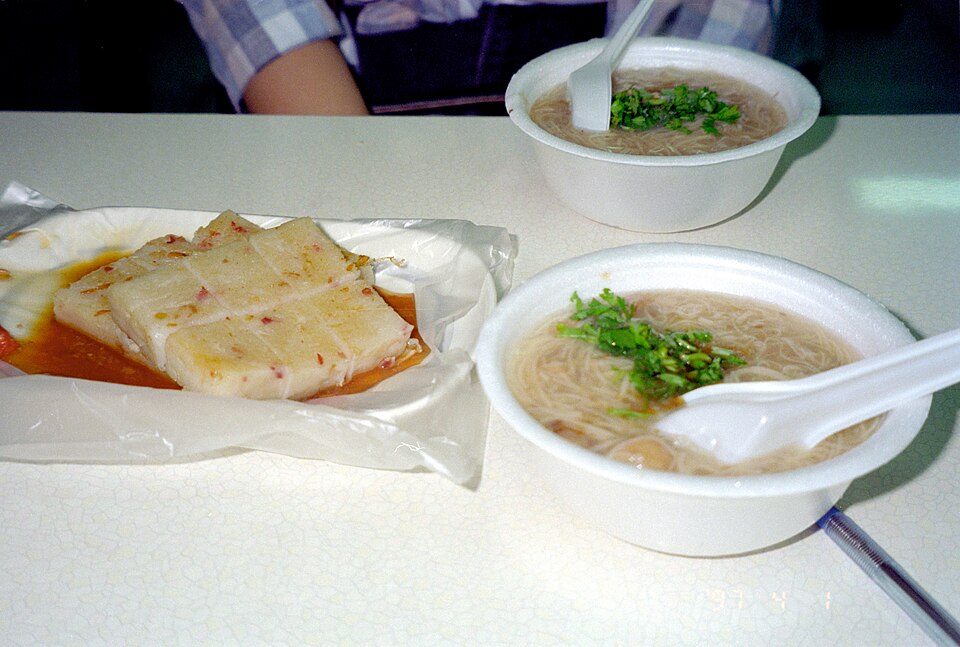
Oyster thin-noodle soup (蚵仔麵線) is misua, a very fine wheat noodle, cooked soft in a broth thickened with starch and topped with small oysters. Most shops use red misua, which is really tan-brown and holds up to long simmering. Many stalls also offer braised pork intestine, alone or with the oysters, as 蚵仔大腸麵線.
Where it came from
The dish descends from 麵線糊 (misua paste), a thick noodle porridge from Quanzhou and Xiamen. It reached Taiwan during the Qing dynasty and changed from place to place with local produce. Misua was a common snack after farm work, and one account credits coastal residents with creating the oyster version. Changhua, Chiayi and Tainan are still the main oyster-producing areas.
The red noodle is linked to Hokkien people who left home for work and needed noodles that would travel and keep. Steaming or frying white misua as it dries caramelises it to brown. Handmade misua still goes through about fifteen steps and dries in the sun for a day or more. Lukang in Changhua is the main production centre.
A popular tale says the Qianlong emperor named the dish 'dragon-whisker pearl porridge', but no historical record supports it. In southern Taiwan the soup is often still sold as 麵線糊 or 麵線羹.
How it is made
The broth is thickened with starch: sweet potato starch in shops, tapioca at home. The oysters are dusted in sweet potato starch before blanching, and some vendors reuse the cloudy blanching water as the soup base. The stock varies by region, from plain bonito (柴魚) in the north to pork bones and bonito in central Taiwan and richer mixes in the south.
How to eat it
A snack for any hour, mostly sold from street stalls. Vendors usually ask whether you want chilli, and black vinegar, minced garlic and coriander go in to taste. Ask for 蚵仔大腸麵線 to get oysters and intestine together. Anyone who avoids oysters can order the noodles without them.
Around Taiwan
- Tainan
- Tainan farms oysters on floating rafts offshore, with the peak harvest from March to June. Cigu Yang Ke Yuan Chia (七股養蚵園家) in Rende, run by an oyster-farming family, fills its misua with fresh oysters and meatballs.
- Kaohsiung
- Kaohsiung misua is thicker and chewier, and the flavour sweeter. The food writer Jiao Tong (焦桐) grew up here on the oyster version and found Taipei favoured intestine instead.
- North
- Around Taipei the broth is usually bonito-based and toppings are kept simple, mainly oysters or intestine.
- Central
- Central Taiwan builds its broth on pork bones as well as bonito and adds more toppings: intestine, oysters, pork thick-soup pieces and small intestine. Misua from around Lukang is finer and softer.
- South
- Further south, broths take dried flounder or bonito, garlic crisps, shiitake and dried shrimp, and toppings can include fish paste and squid paste. Shops often call the dish 麵線羹.
- Outlying islands
- Kinmen serves white misua with oysters, intestine and pig's blood, as in Quanzhou. Its oysters are wild stone oysters, and the local hand-pulled misua is chewier.