What it is
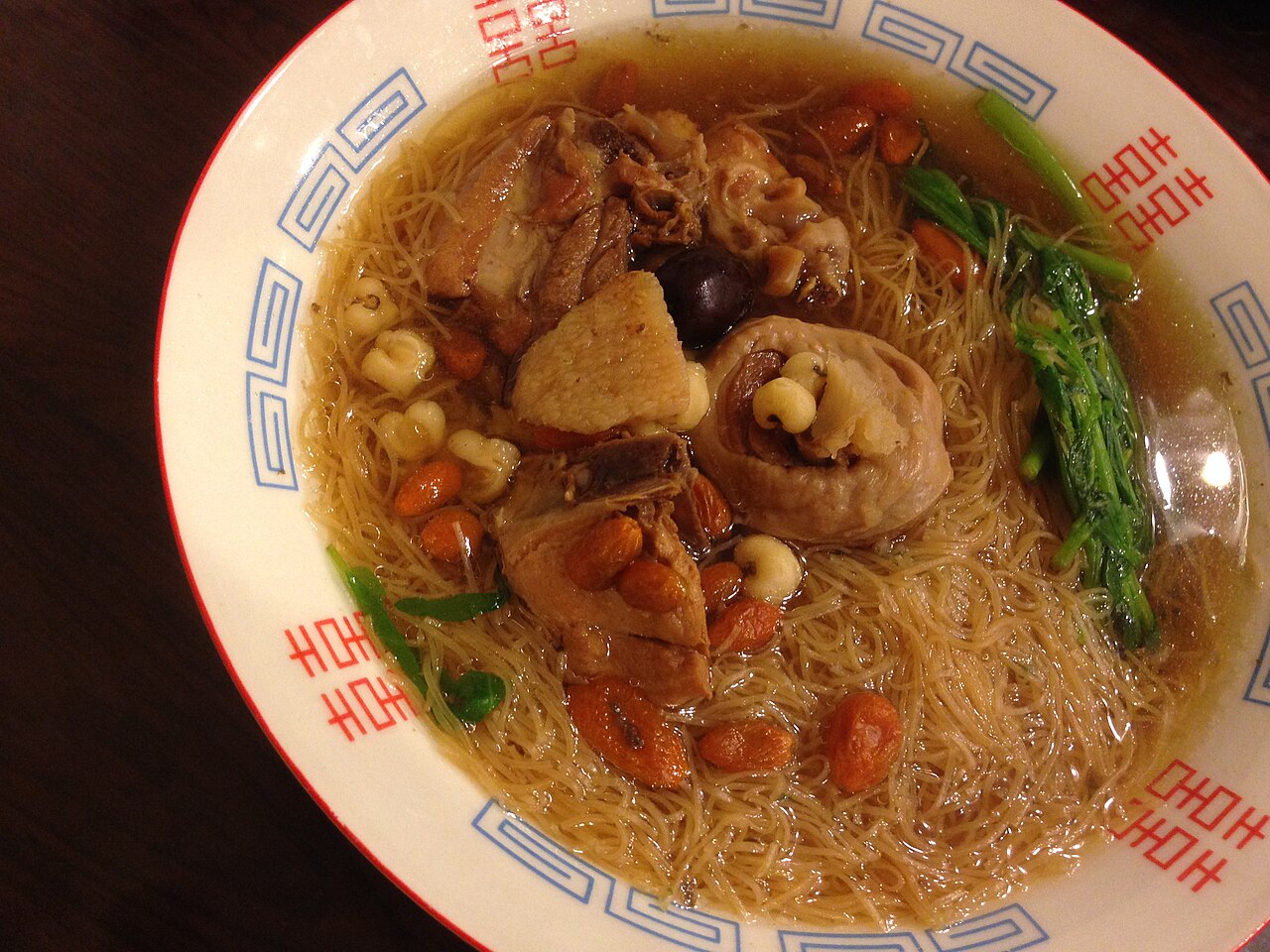
Braised pork trotter served with noodles. The classic form is pork trotter vermicelli (豬腳麵線), where the meat comes with fine wheat noodles called mee sua (麵線) in broth. Noodle shops also serve trotter over dry-tossed noodles (豬腳拌麵) that soak up the braising sauce. The skin is prized for being springy and gelatinous.
Where it came from
The dish is mostly about symbolism. Long, uncut noodles stand for long life and the trotter for strength. A Taiwanese saying sums it up: noodles add blessings and years, trotters add vigour (呷麵線添福壽,呷豬腳增勇健). One common explanation for its ritual role is that meat was scarce in farming households and trotters were a treat kept for festivals and weddings.
It was a traditional birthday meal, served in place of a cake. For a parent's birthday the classic gift was a whole trotter and two bundles of raw noodles wrapped in red paper. In a lunar leap month, married daughters take trotters or the finished dish to their parents, because folk belief holds that the extra month can shorten a parent's life.
The dish is also eaten to shake off bad luck after leaving hospital or prison. Released prisoners once stepped over a charcoal stove before sitting down to a bowl. A well-known quip about criminal trials uses it as the punchline: a heavy sentence at the first trial, halved on appeal, and pork trotter noodles at the third (一審重判,二審減半,三審豬腳麵線). In other words, the defendant walks free and only needs to eat away the bad luck.
How it is made
Front trotters, hoof and all, are a common choice. They are cleaned, blanched and braised slowly for a few hours with soy sauce, rock sugar, ginger, spring onion and spices such as cassia bark. Some cooks fry the pieces before braising. The vermicelli is cooked separately and covered with broth, with the trotter alongside and fried shallots on top. For the dry version, noodles are tossed with the braising liquid.
How to eat it
People eat it on birthdays, in leap months and after a run of bad luck, but also as an ordinary noodle-shop meal. Ask for vermicelli in soup (豬腳麵線) or dry noodles (豬腳拌麵). Pieces often come on the bone, so pick the meat and skin off with chopsticks. In some Taichung temple-area shops, diners turn the bowl round once before eating, for a full turn of luck.
Around Taiwan
- Kaohsiung
- Gang Yuan Beef Noodles (港園牛肉麵) in Yancheng is named for its beef, yet many regulars order the springy trotter dry noodles instead. They often sell out by early evening on weekdays.
- Central
- Taichung has several well-known trotter shops, some near temples. Fu Juang Yuan (富狀元豬腳) keeps whole trotters simmering all day in its marinade, and Fu Din Wang (富鼎旺) buys its trotters fresh from local farms.
- South
- Wanluan (萬巒) in Pingtung is the south's trotter town. Shops braise front trotters, tendons left in, with star anise and dozens of other herbs. The trade dates from the late 1940s, when Wang Yi-ti, a Fuzhou native, opened a canteen there and began selling braised trotters.