What it is
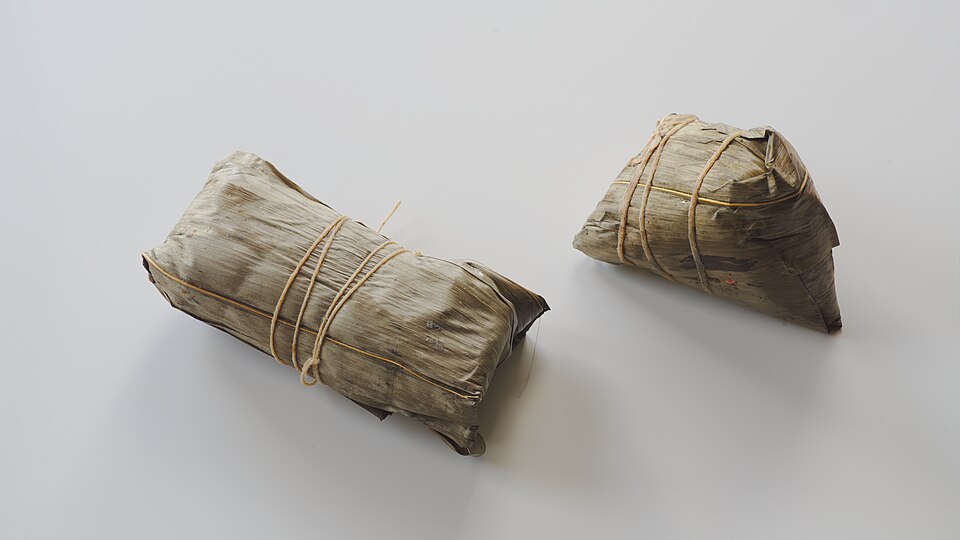
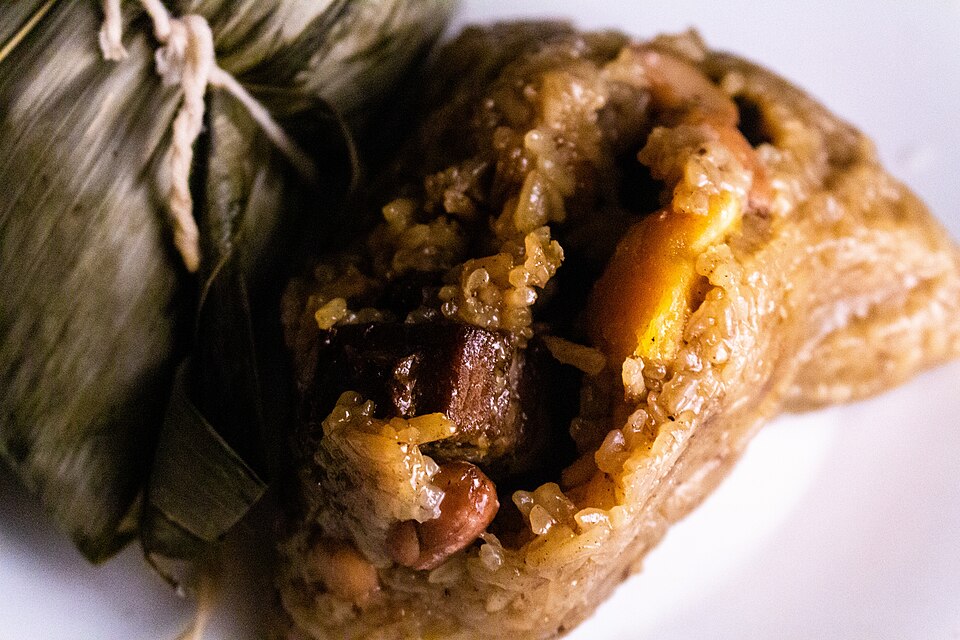
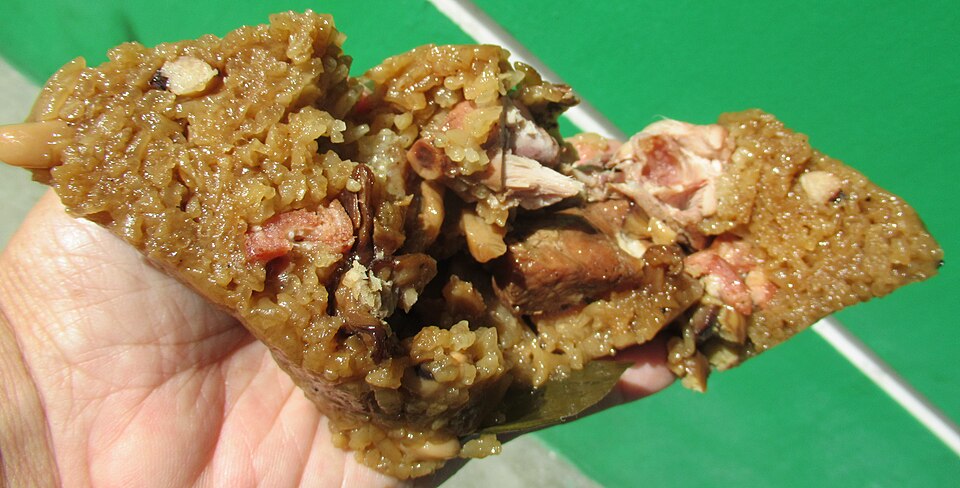
Caizong (菜粽, Taiwanese tshài-tsàng) holds nothing but glutinous rice and peanuts, wrapped in leaves and boiled for a long time. The peanuts turn soft and almost merge with the sticky rice. Here 菜 means meat-free, not vegetables. The taste is plain and mild, so the sauce and toppings do much of the work.
Where it came from
This is a southern habit. Shops cluster in Tainan, Kaohsiung and Pingtung and grow scarce north of the Bazhang River (八掌溪), which divides Tainan from Chiayi. In Chiayi people still say caizong, though shop signs there often read 花生素粽, peanut vegetarian zongzi.
No record shows where or when it began. The author of a Smile Taiwan essay guesses that families wrapping dumplings for the Dragon Boat Festival left out the meat for vegetarian relatives, and that vendors later turned the meatless kind into a trade of its own. In Tainan it became an everyday breakfast rather than a festival food. At least two Tainan shops have sold it for more than 60 years.
How it is made
Raw glutinous rice and peanuts are wrapped together and boiled, which is the southern Taiwanese method. Northern zongzi start from stir-fried rice and are steamed, so their grains stay separate; boiling makes the southern kind moist, sticky and springy. In Tainan the usual wrapper is shell ginger leaf (月桃葉), which has a sharper, wilder scent than bamboo. Pingtung makers also use bamboo leaf, as does Caizong Li in Kaohsiung.
How to eat it
Mostly a breakfast, often with a bowl of miso soup. The usual dressing is sweet soy paste (醬油膏) and peanut powder, often with coriander. Some shops add garlic paste or chilli sauce, while one old Tainan stall refuses to use peanut powder at all. Some older Tainan diners eat it with a fried dough stick (油條).
Around Taiwan
- Tainan
- Shell ginger leaf is the Tainan norm, and miso soup the usual partner. Shatao Temple Caizong (沙淘宮菜粽) has sold from a stall with no signboard for nearly 70 years, dressing it with only soy paste, sesame oil and coriander.
- Kaohsiung
- Caizong Li (菜粽李) in Lingya District, open for more than 60 years, wraps Changhua glutinous rice and Yunlin peanuts in bamboo leaf and serves kelp miso soup alongside. It has held a Michelin Bib Gourmand since 2022.
- North
- In Taipei, Wangji Fucheng Rouzong (王記府城肉粽) in Songshan, a shop selling Tainan-style dumplings, lists it as 落花生粽 and marks it vegetarian.
- Hakka
- Southern Hakka communities rarely use the word caizong, which is Taiwanese. They call a peanut dumpling 花生粽 or 番豆粽仔.