What it is
Mian geda (麵疙瘩) are rough little pieces of wheat dough. Instead of cutting noodles, the cook pinches, tears or drops the dough straight into the pot, so no two pieces match. The quick home version is a runny flour paste dropped into boiling water. Some shops in Taiwan knead a firm dough by hand for a chewier bite.
Where it came from
Geda (疙瘩) is a slippery word. The sinologist Victor Mair, writing on the Language Log blog, lists pimple, knot, lump and swelling among its senses, which is why one machine translation turned the dish into "pimple soup". A commenter there argues it is a neutral word for a knot or small ball.
The same discussion places the dish in northern China. One commenter says the soup is called ban tang (拌湯) in Shanxi, Shaanxi, Henan and Inner Mongolia, that geda tang (疙瘩湯) is more a Beijing name, and that southerners rarely eat it. Another calls it northern comfort food, made when time or ingredients run short.
In Taiwan it is sold by small noodle shops, usually as a soup or a stir-fry.
How it is made
There are two basic methods. For firm pieces, flour and water are kneaded into a smooth dough, which is pinched or torn into boiling broth. For softer drops, flour and water are mixed into a thick batter and dropped into the pot a spoonful at a time. The pieces cook in a few minutes. Shop versions vary: one Taipei shop kneaded its dough in three stages without a starter and cooked it in a clear, unthickened broth with Chinese cabbage and shiitake.
How to eat it
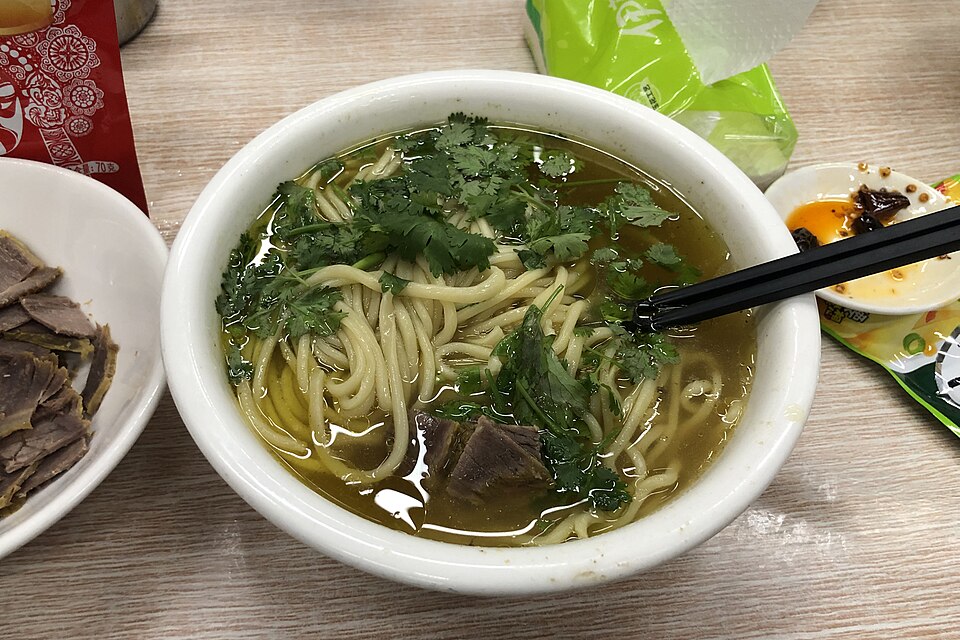
It is a simple lunch or supper. It comes in soup, often with pork, cabbage and mushrooms, or stir-fried. Some shops serve it in a beef broth or dressed with pickled mustard greens. Order it as soup (湯) or fried (炒).
Around Taiwan
- Kaohsiung
- Lung Fang Beef Noodles in Cianjhen District, a five-table shop with a Michelin Bib Gourmand, serves its hand-rolled dough knots in a chilli bean broth with braised beef shin, or dressed with pickled mustard greens.
- North
- In 2007 a small shop with no sign near National Chengchi University in Taipei served mian geda in clear broth or stir-fried. A Malaysian student persuaded the owner to pinch the dough thinner.
- Central
- In Taichung, Tan Family Handmade Mian Geda (譚家手工麵疙瘩) on Jiguang Street in Central District makes everything by hand, from dough to noodles.