What it is
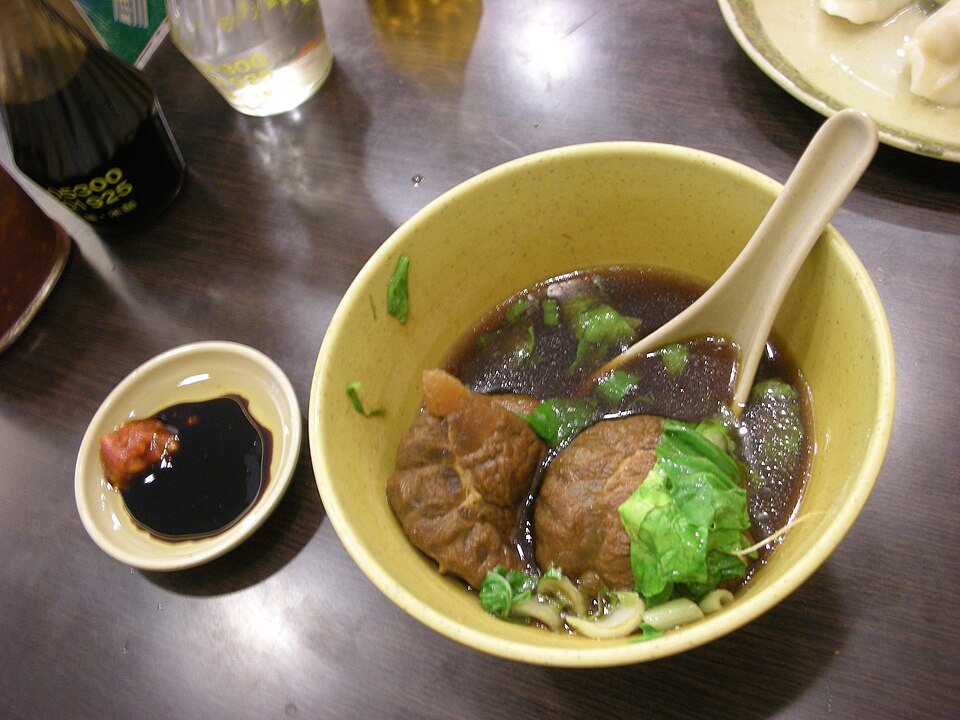
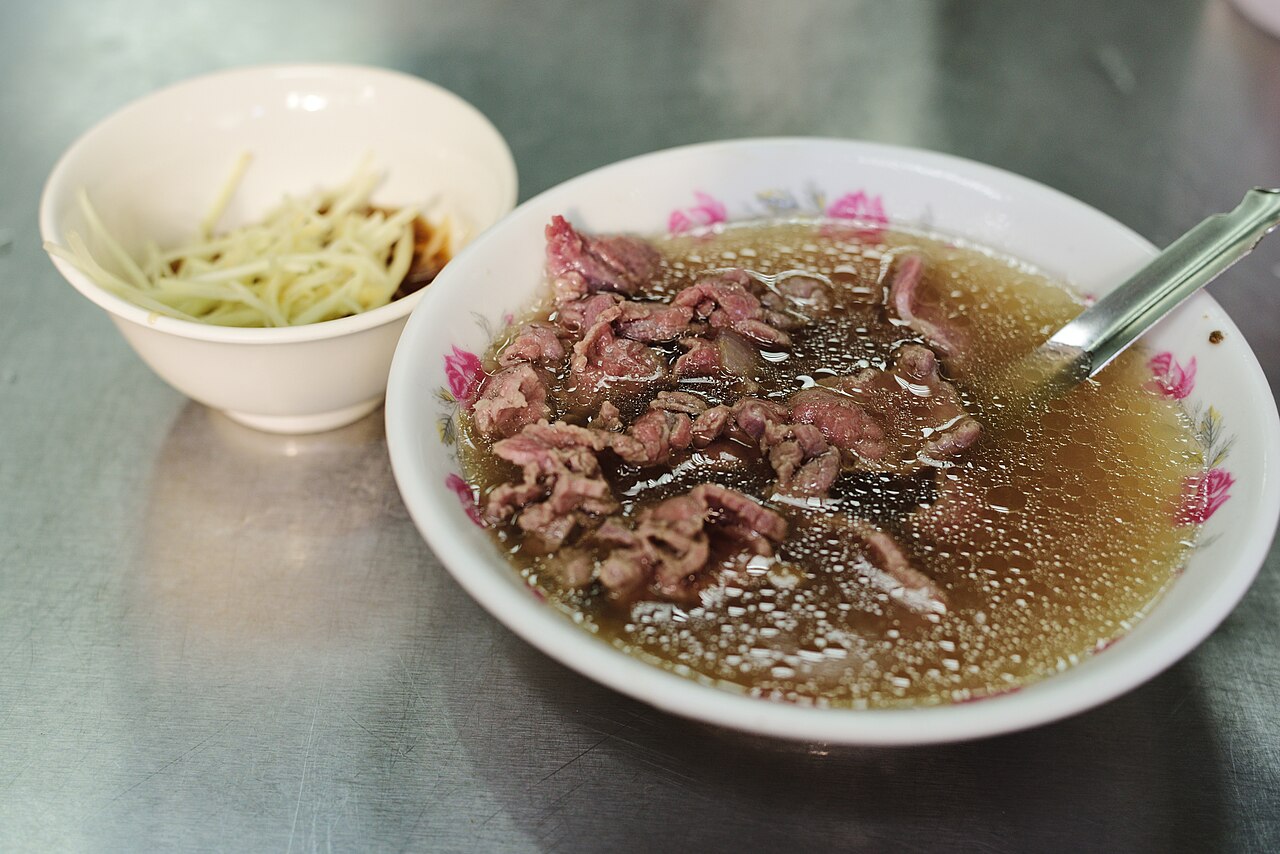
Tainan beef soup (牛肉湯) is clear beef broth ladled over thin slices of raw beef, which it cooks only partly so the meat stays tender. Shops advertise 溫體牛, "warm-body beef", meaning freshly slaughtered local meat. It is not beef noodle soup. Culture and travel specialist Yu Chih-wei (游智維) counts more than 300 beef soup shops in Tainan.
Where it came from
For a long time beef was not everyday food in Taiwan. Early settlers from the mainland shunned it, partly out of feeling for the oxen that ploughed their fields, and the Qing government banned the slaughter of plough oxen. Japan took over the island in 1895 and brought beef eating with it. By 1907 a column in the Taiwan Nichi Nichi Shinpo (台灣日日新報) listed red-braised beef on a menu of Taiwanese cuisine.
How the Tainan soup began is uncertain. Beef soup enthusiast Chang Chia-chun links it to the Japanese colonial era and thinks the first bowl in Tainan was probably served at the Four Seasons Inn, then a top-class hotel. Why it became breakfast is still unclear. The food writer Han Liang-lu (韓良露) traced the morning habit to migrants from Quanzhou, a port where eating beef carried no taboo; another writer, Yu Fu (魚夫), is sceptical. Yu Chih-wei's explanation is social: Taiwan's farmers did not kill cattle for meat, and Tainan's heavy breakfasts reflect its old standing as the island's leading city, whose wealthier residents could afford a costly meat.
Supply keeps the habit going. Shanhua District in Tainan has Taiwan's largest cattle slaughterhouses, and Tainan raises more beef cattle than any other city or county. More than 90 per cent of the beef in the soup comes from dairy breeds, mostly bulls raised from male calves.
How it is made
Each shop builds its broth on beef bones, then adds its own extras: Hsi Lo Tien Beef Soup (西羅殿牛肉湯) uses brisket, fat and onion, and A Cun Beef Soup (阿村牛肉湯) puts corn into a recipe it keeps secret. Small vans start delivering freshly killed beef after midnight, and shops promise it arrives within six hours of slaughter, a window imported beef cannot meet. The meat is sliced thin, by hand at some shops, and boiling broth is poured over the raw slices in the bowl.
How to eat it
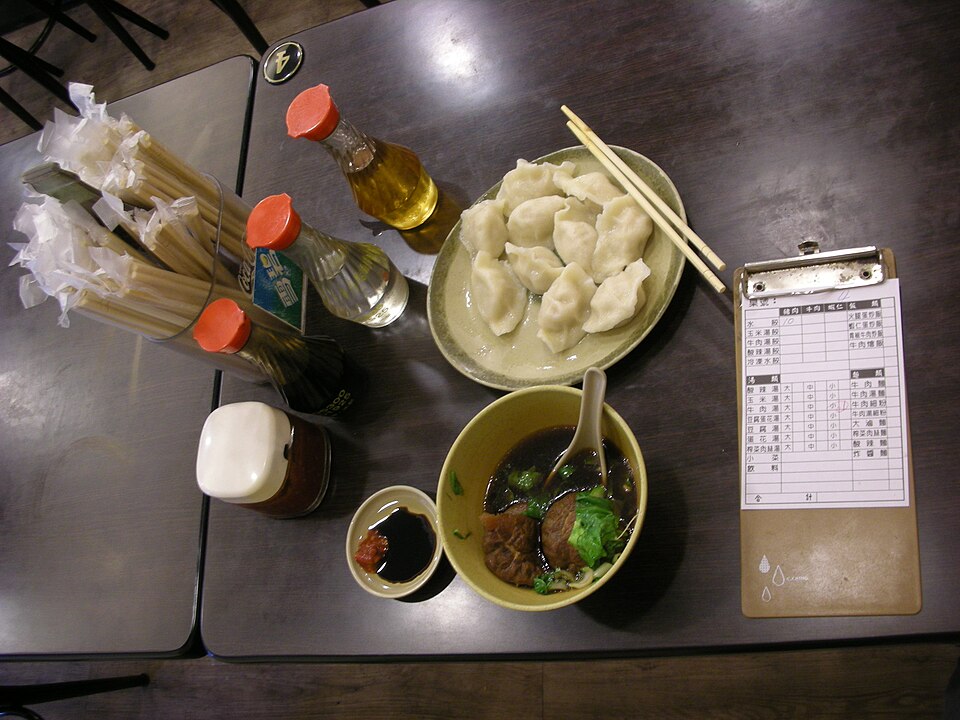
In Tainan it is mainly a breakfast, and some shops have customers from 4 a.m., though others trade late at night. Rice often comes alongside, sometimes topped with beef sauce or braised pork. Dip the meat in soy paste with sliced ginger, or add rice wine or chilli sauce. Some shops sell several grades, so say which you want.
Around Taiwan
- Tainan
- Tainan is where beef soup became a breakfast; the rest of farming Taiwan does not start the day with such a heavy meal. Shops here can count on same-day beef from the slaughterhouses of Shanhua, a district within the city.
- Kaohsiung
- Kaohsiung's Niu Lao Da (牛老大涮牛肉) began as a beef soup street stall in 1996. It now serves mainly shabu-shabu hotpot, still made with beef slaughtered in Tainan and shipped in daily.
- North
- In Taipei, the beef offal soup shop Jin Chun Fa (金春發) is listed by the city as a century-old business. Its story puts the founder in Dadaocheng (大稻埕) in 1897. Yu Fu doubts this, as maps from 1900 to 1904 show no roundabout where he supposedly traded.