What it is
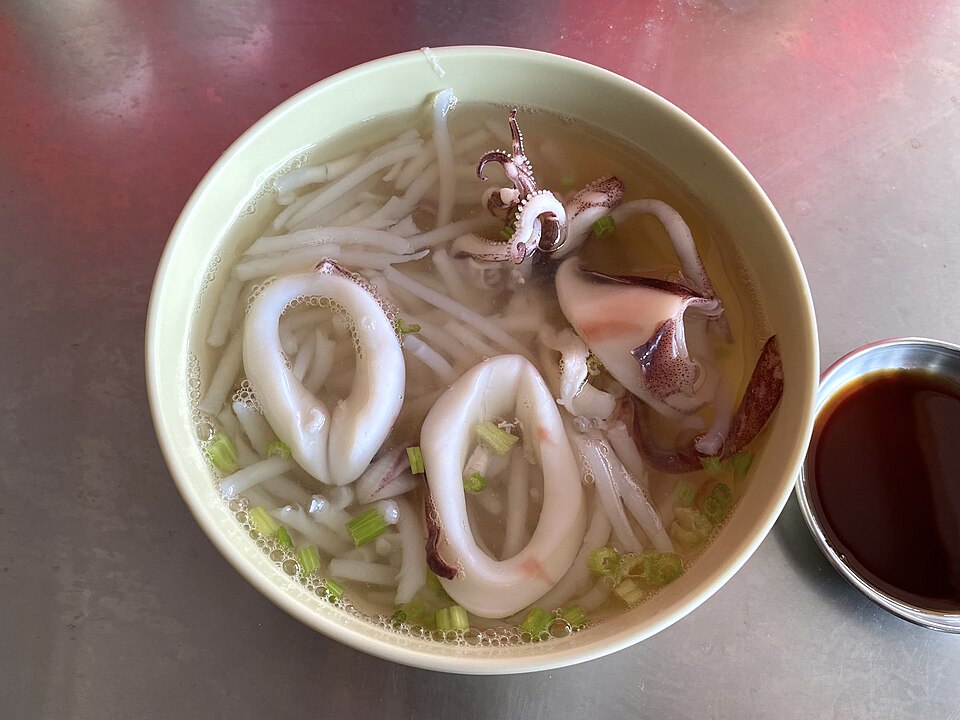
Ban tiao (粄條, also written 板條) are wide, flat noodles made from rice. Ban (粄) is the Hakka word for the many cakes made from rice, and tiao means strips. In the Liudui (六堆) Hakka communities of Kaohsiung and Pingtung the uncut sheet is called 面帕粄, "face-towel ban", because it looks like a washcloth. Hokkien speakers call it 粿仔.
Where it came from
Ban tiao is part of the Hakka rice-cake tradition and is also eaten in Hakka areas of south China. A Hakka saying holds that one piece of ban is worth three bowls of rice (一塊粄,抵三碗飯). Rice cakes were easy to carry and filling, which suited people doing hard physical work, and ban tiao served both as a meal and as a traditional snack in the busy farming seasons.
For a long time it was home cooking rather than food eaten out. Older residents of Wanluan (萬巒), Pingtung, recall that before the 1960s a bowl of ban tiao was a treat for guests, for birthdays, or for a sick child or elder. One shop there says its family has sold it for more than 130 years. Ban tiao is now a fixture of Hakka towns. Pingtung County's Hakka affairs office has counted at least 109 ban tiao shops in the county's eight Hakka townships.
How it is made
Non-glutinous rice (在來米) is soaked for a few hours and ground into a batter. Some makers mix in sweet potato starch, and one old Wanluan shop insists on rice aged over three years. The batter is spread on an oiled tray and steamed until it sets into a thin sheet. The sheets are folded, hung on bamboo poles to cool, then sliced into strips. Cutting even strips by knife is a skill: one Wanluan owner practised for half a year.
How to eat it
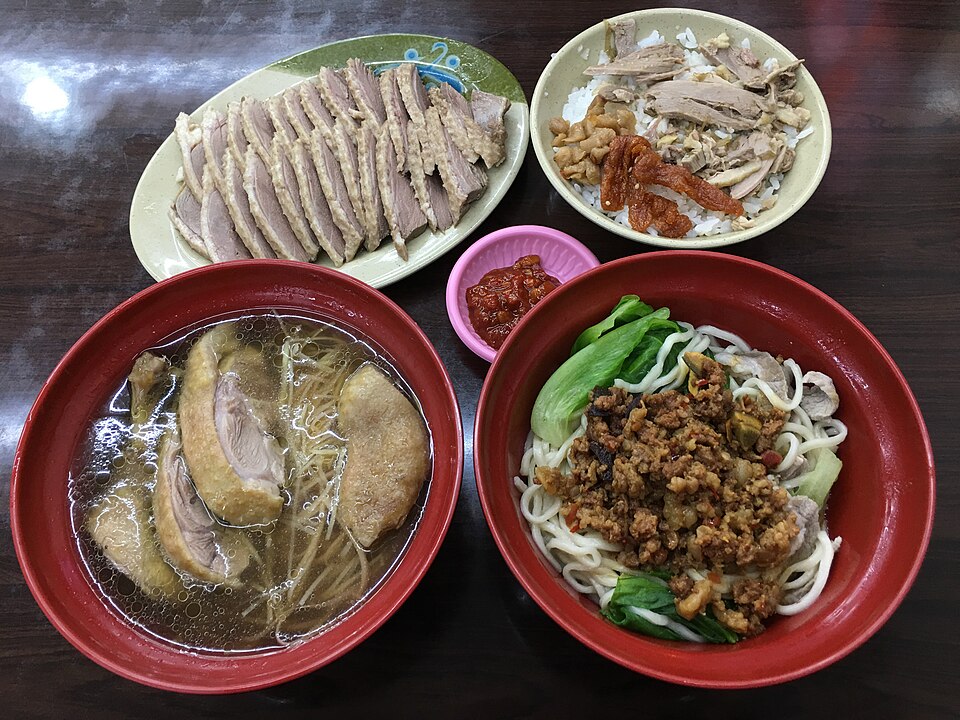
Ban tiao is everyday food rather than a festival dish. The usual bowl is soup: the noodles are blanched with bean sprouts and Chinese chives, dressed with lard, soy sauce and fried shallots, topped with slices of lean pork and covered with broth. Ask for 湯粄條 for soup or 乾粄條 for dry noodles without broth. Stir-fried ban tiao (炒粄條) is also served.
Around Taiwan
- Kaohsiung
- Meinong (美濃) is the best-known ban tiao town. Most of its shops sit on Meixing Street (美興街), also called Ban Tiao Street (粄條街). One Meinong couple makes coloured noodles, tinting the rice batter with produce such as beetroot, dragon fruit and sweet potato leaves.
- South
- Pingtung's Hakka townships have their own versions. Neipu (內埔) adds soybeans and pig's blood to the bean sprouts and chives, while coastal Jiadong (佳冬) and Xinpi (新埤) replace the pork with fish. The county government has held a year-end ban tiao culture festival.
- Hakka
- Northern Hakka use the name 粄條, after the strips, while the Liudui Hakka of the south name the whole sheet 面帕粄.