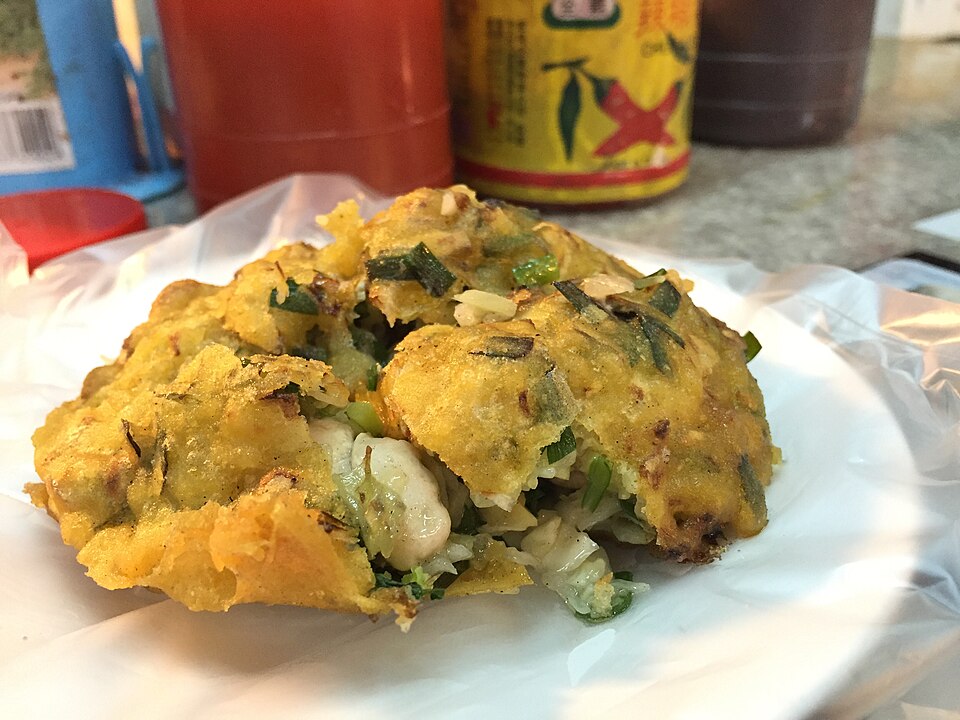
What it is
An oyster fritter (蚵嗲, ô-te) is a round, domed cake of batter filled with shredded cabbage, chopped garlic chives, a little minced pork and fresh oysters. It is deep-fried until the shell is crisp and the filling just cooked. Some places add bean sprouts. Stalls usually serve it with a dipping sauce.
Where it came from
The fritter is a coastal snack of Taiwan and southern Fujian. It belongs to the oyster-farming villages and harbour towns of Taiwan's west coast, from Changhua down through Yunlin, Chiayi and Tainan towards Kaohsiung.
The name is written several ways. 蚵炱 (ô-te) is one form, 蚵嗲 is the everyday spelling and 蚵仔炸 ("fried oyster") is also common. The writer Yu Fu (魚夫) suggests 蚵嗲 joins two languages: ô is Hokkien for oyster, and the Fuzhou word for oyster sounds like the 嗲 in the name. Across the Strait the snack goes by other names, such as 海蠣餅 in Fuzhou and 炸粿 in Quanzhou.
One food writer searched online maps for each name. Stalls calling it 炸粿 cluster in Penghu and along the coast from Hsinchu to Yunlin, which he links to early settlers from Quanzhou. Further south and inland, 蚵嗲 takes over. In Penghu, 炸粿 is a fritter topped with shrimp, and one Magong stall has a sign telling customers that 炸粿 is not 蚵嗲.
How it is made
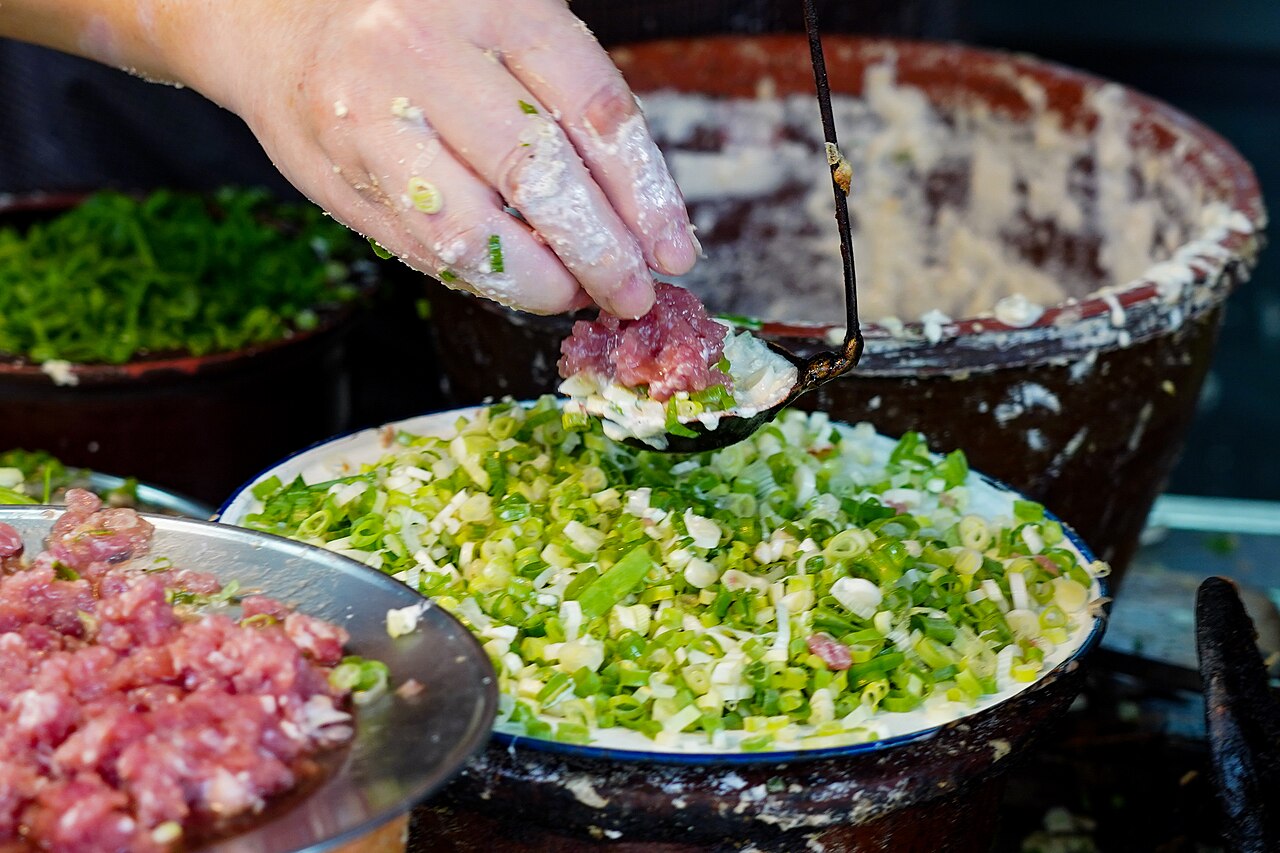
The cook uses a shallow, slightly dished iron ladle. A base of flour-and-egg batter goes in first, then shredded cabbage, chives, minced pork and oysters, then more cabbage. A final coat of batter seals the top, and the ladle is lowered into hot oil. Once cooked, the fritter loosens easily. A light tap frees it from the ladle, and it is set aside to drain.
How to eat it
It is a snack rather than a meal, eaten hot from the fryer while the shell is still crisp, with the dipping sauce. Many fritter stalls fry other seafood too, such as shrimp cakes, squid and small fish.
Around Taiwan
- Tainan
- In Tainan the fritter is common along the coast, from Beimen and the oyster beds of Qigu down to Anping. Hsiu Li (秀里蚵嗲) in Qingkunshen, a fishing village in Jiangjun, uses oysters farmed nearby.
- Central
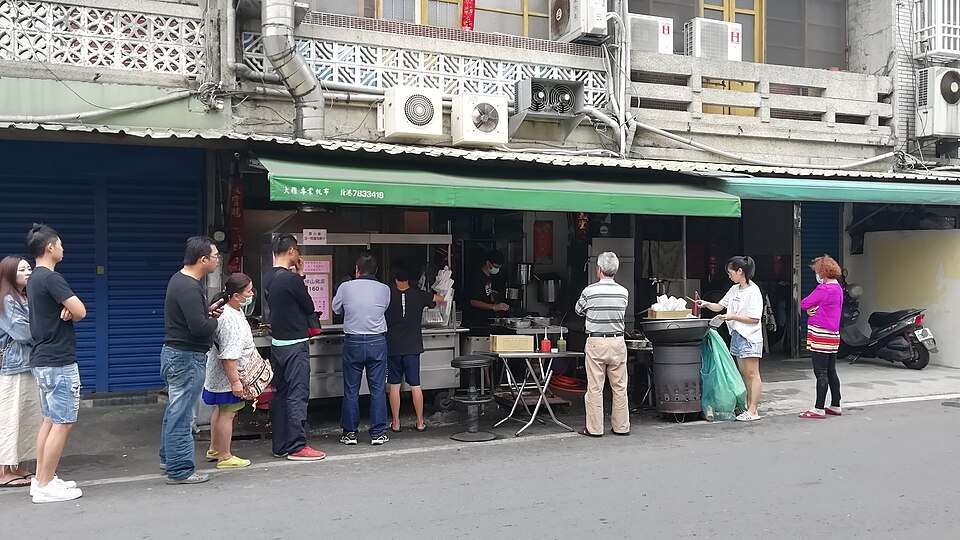
- Wanggong fishing port in Fangyuan, Changhua, has a street with more than a dozen fritter shops, where locals call the snack 蚵仔炸. Former president Chiang Ching-kuo was a regular, and shops hang photos of his visits. In Dajia, Taichung, Wang Yuan Chi (王元吉炸粿) also sells a pork-filled version (肉粿).
- Outlying islands
- Kinmen's fritters are smaller and paler, use small rock oysters with cabbage, and taste closer to the Xiamen style. In Penghu the similar fritter (炸粿) carries shrimp rather than oysters.